Green Paper Gives Hope For Welsh Rivers
Welsh Government’s proposals for change to the water sector are encouraging and present an important opportunity to improve rivers
Welsh Government has yesterday published a Green Paper on the reform of the water sector in Wales. It follows the Independent Water Commission’s review in 2025 (Cunliffe review) and subsequent Defra White Paper, issued earlier this month outlining the changes for England.
The Green Paper describes Welsh Government’s thinking on change to the sector. After years of deterioration of the quality of rivers, inertia and lack of effective action from those responsible for their protection, it is just possible that these proposals provide a beacon of hope.
Currently, the way we manage water in Wales is subject to overly complex processes. We therefore welcome and strongly support the proposed outcome-driven approach and for this to influence future legislation, structure and process.
Allow Wales to have the powers to reform
One of the encouraging aspects of the Green Paper was the call for greater devolved powers over the water environment. It sets out that extending the remit of the Senedd and Welsh Government will be needed to bring forward in Wales the recommendations made by the ICW review last year.
Also heartening is the clear direction from Welsh Government to strengthen devolved powers for Wales’s ability to implement tighter environmental legislation and delivery.
In its Green Paper, Welsh Government argues correctly that a strong legislative framework for water is required and that the current one is “....overly complex, difficult to navigate, and lacks clarity and focus on key priorities and outcomes.”
It suggests that devolved powers and Welsh legislative framework, including the Well-being of Future Generations Act, the Environment (Wales) Act 2016, and the Environment Principles Bill, provide a strong foundation for change.
New direction for land spreading in Wales
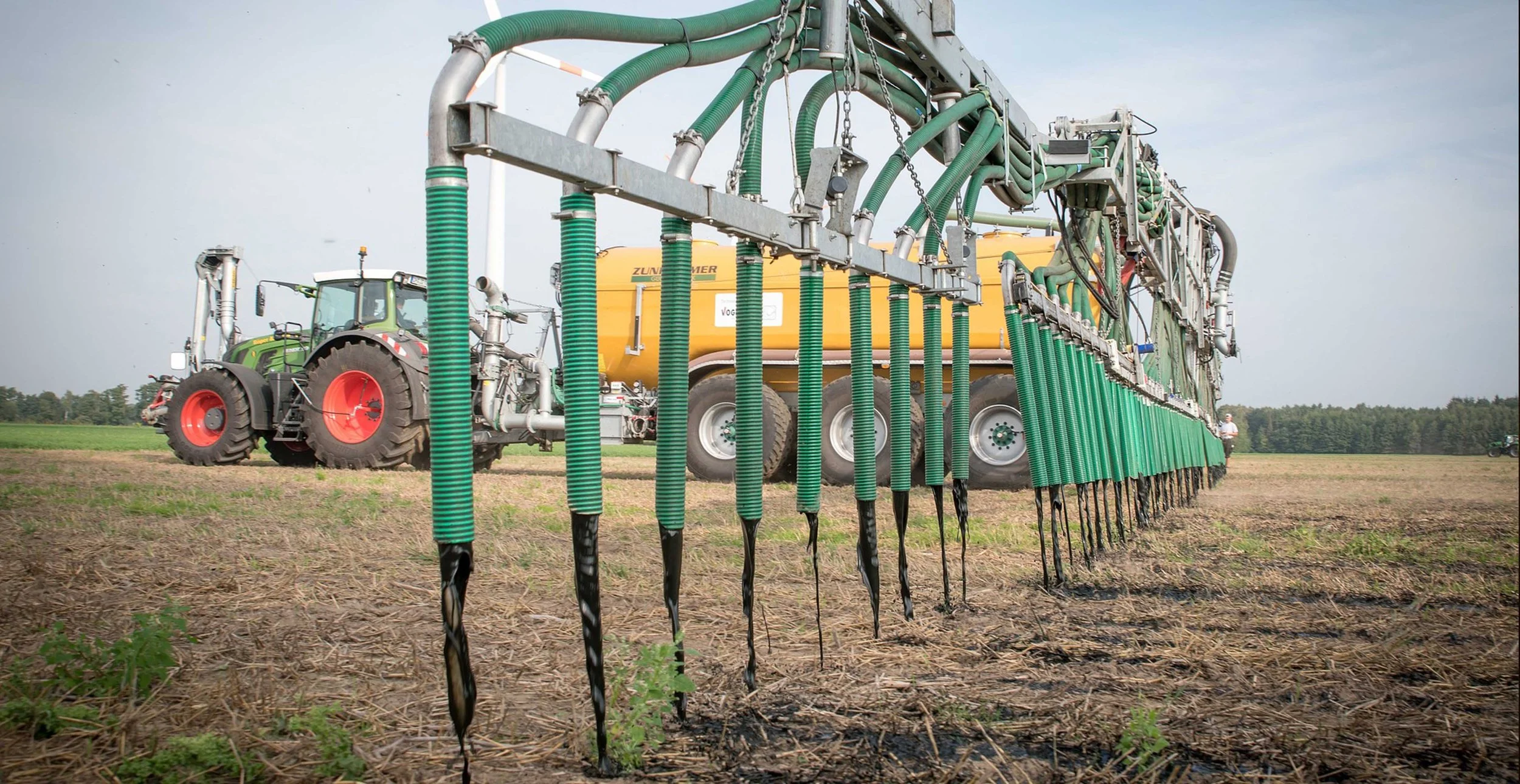
In 2023, Afonydd Cymru and Fish Legal challenged Welsh Government to close the gaps in regulation and planning that were allowing organic land-spreading practices to pollute, specifically in relation to the largely unregulated anaerobic digester industry.
We are particularly encouraged, therefore, to see recognition of this problem in the Green Paper, and that a strengthening of regulation and enforcement is required in this area.
Importantly, and in contrast to the Westminster White Paper that focuses on sewage sludge, these materials include digestate, manures and slurry. These are some of the chief contributors to high nutrient levels in Welsh rivers and (especially in the case of digestate and slurry) causes of specific, catastrophic incidents.
Until the issue of agricultural pollution is also resolved in Wales, we will not have clean and healthy rivers.
Symptom, not cause
There are other encouraging aspects of the Green Paper such as the expressed preference to remove pollutants at source and not through treatment.
This signals strong intent to apply the Producer Responsibility Principle in Wales.
Is there enough change?
A significant difference in approach to England is the proposal that environmental regulation remains with Natural Resources Wales.
So, while it suggests that the economic regulation will be a wider remit looking across the catchment including asset management, flooding, drainage and infrastructure, it seems fixed on the idea that ‘Natural Resources Wales’s integrated remit ……. will remain intact’.
If the environmental regulator remains as is, it must be sufficiently resourced, employ staff with the necessary expertise and strengthen its enforcement culture. We have seen some improvements in enforcement recently but overall, Natural Resources Wales has been far too weak in this area.
The Green Paper also points to weaknesses in the current Water Framework Directive (WFD), such as not keeping pace with persistent chemicals (such as PFAS), microplastics and a lack of consideration of human health.
It appears there is a desire to retain the WFD, and to strengthen and update it. While this is welcome, a full review of the effectiveness and efficiency of the WFD process will be required. Monitoring must identify issues, provide evidence and lead to effective action.
Who Pays?
The thorny issue of how the reform to water is going to be funded is not resolved either.
The Green Paper points to concerns about affordability in Wales, the lack of historical investment and recognises that reform will need significant funding.
However, this does not address the problem that more money will be required than can be raised through water bills.
Governance must be clear
If the last 15 years have shown anything, it is that shared regulatory responsibility of cross-border rivers has not delivered a cohesive integrated catchment approach.
Given the proposed deviation between England and Wales’s approaches to water reform, cross-border rivers must have a clear, single regulatory lead in the future.
We must not delay
The paper recognises that introducing the necessary legislation to carry out these reforms in Wales could take until the 2030s and underlines a transition process to ensure changes continue at pace while the legal powers are put in place.
Water customers in Wales, however, deserve the same performance delivery as England and Welsh rivers need as rapid reform as possible.
Our overall thoughts…
We welcome this Green Paper, its proposed direction for Wales and its significant potential to effect positive change.
It must be remembered that it is just a consultation at this stage and nothing yet is set in stone. However, it does present an opportunity for Wales to co-design a water sector that works for us and for rivers.
There will, no doubt, be strong challenge to some of the proposed reforms. The hope is that following the consultation, this and the next Welsh Government will press on with the much-needed reforms without unnecessary delay.