A Drier 2025 But Welsh Water Overflows Still Overflowed
Afonydd Cymru have recently delved into the data to see whether or not Welsh Water's overflows were being operated as intended in 2025.
Despite 2025 being a relatively dry year in Wales, sewer overflows were still operating for over 790,000 hours across Welsh Water’s operating area last year.
While this represents a 14% decrease in operation compared to 2024 (922,700 hours), the number far exceeds any other published water company overflow figures for 2025.
The highest total in England was reported by South West Water at 407,006 hours in total. In fact, Welsh Water overflows accounted for over 30% of all recorded spill hours across England and Wales.
Storm overflow operation is generally considered to be a factor of rainfall – the more it rains, the more an overflow discharges. Welsh Water might point out that although 2025 was dry, in much of Wales rainfall was at or slightly above average.
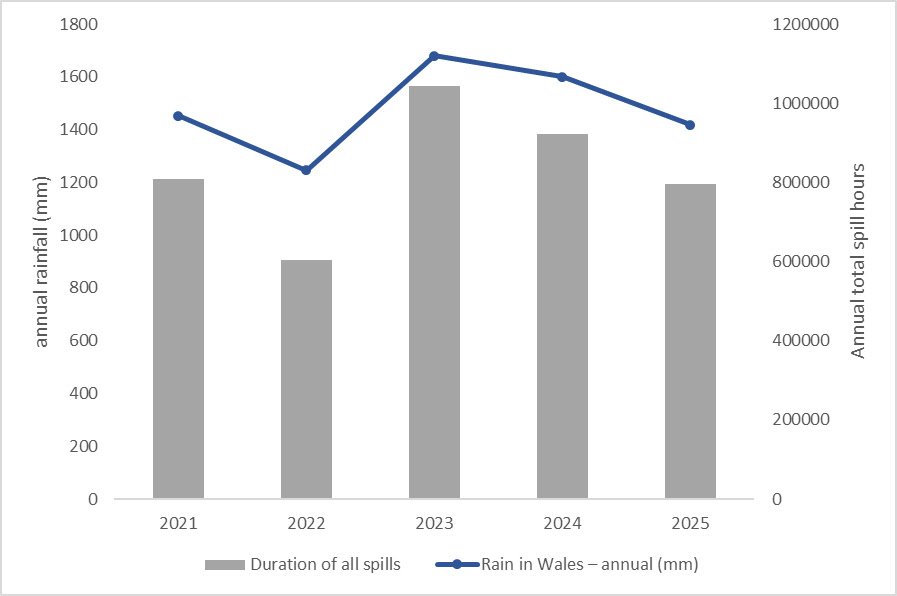
The correlation between rainfall in Wales (2021 – 2025) and the number of hours Welsh Water overflows operated.
However, storm overflows should operate only during ‘exceptional’ rainfall.
In Wales, this has been defined as more than 4mm per hour.
So, legally, storm overflows are permitted by the regulator to operate when rainfall events exceed this threshold.
To better understand this, Afonydd Cymru decided to carry out more detailed analysis of this permit condition to understand whether overflows were compliant to this condition.
Are overflows being operated as intended?
To investigate exceptional rainfall, we need to consider the impact of rainfall patterns upstream of a Welsh Water overflow asset.
For this analysis, Afonydd Cymru used publicly available data from 149 Natural Resources Wales rainfall gauges. While water companies and regulators likely have access to other sites (these would also be used to support investigations into permit breaches), the NRW gauges provide a robust national picture.
We identified the gauges closest to Welsh Water assets; 86% were within 10km.
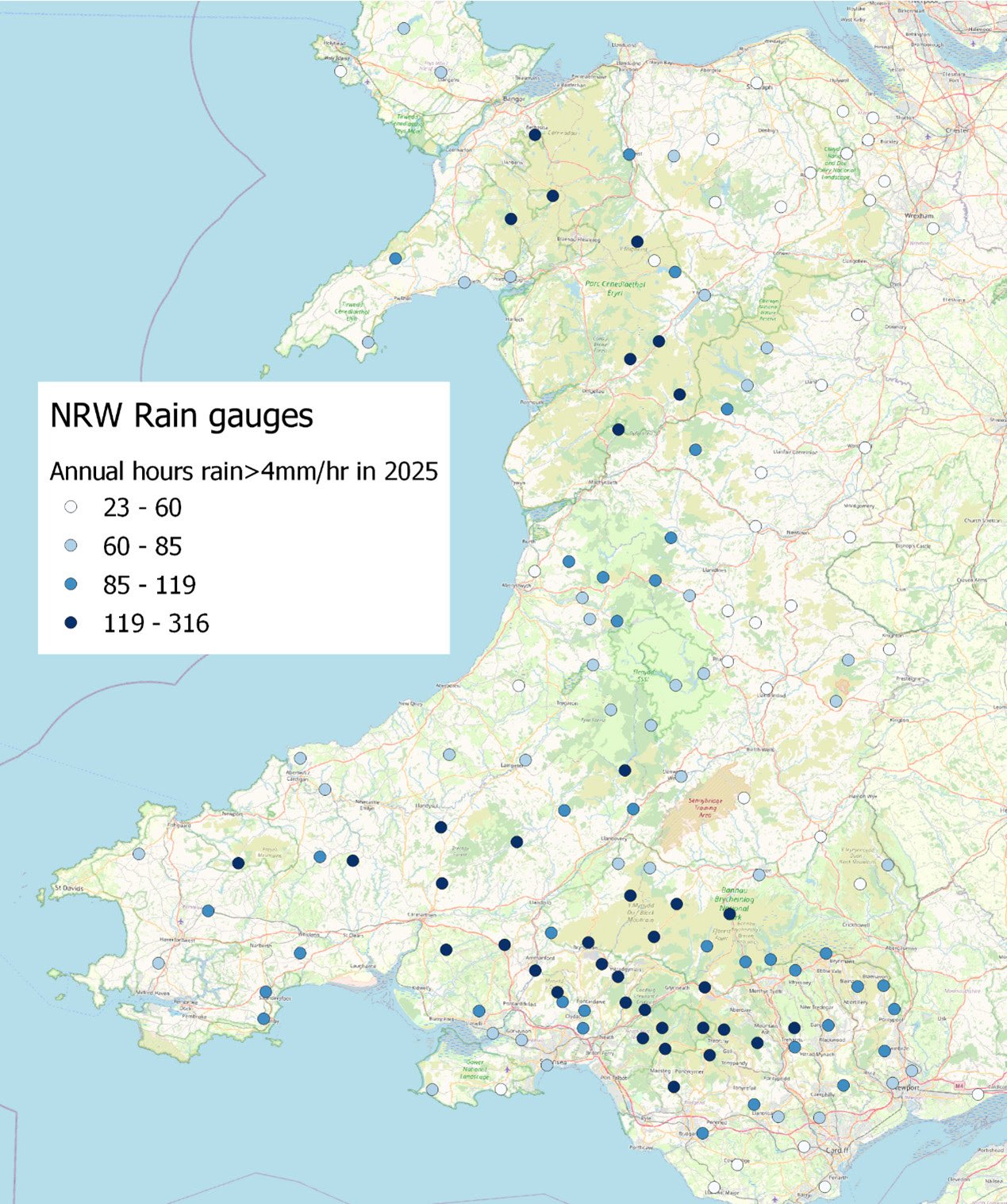
Map 1: The number of hours rainfall was above 4mm per hour in 2025 at Natural Resources Wales rain gauges.
Map 2 (below) also shows the overflows and their total hours of operation for 2025. The darker the colour, the more they operated.
In a dry year, we would expect to see higher overflow operation only in areas of high rainfall.
In some areas – including the South East Valleys, the North East of Wales and along the border – the main sewer overflows operated as we would expect and were mainly operating with higher rainfall as they are legally allowed to do.
However, our analysis shows a different picture in parts of West Wales. Here, many sites operated outside of their permit, with some sites operating for over 5000 hours during the year.
Our analysis also showed some differences in where failure occurred compared to previous wet years, with a greater proportion of spills coming from wastewater treatment works rather than the wider network.
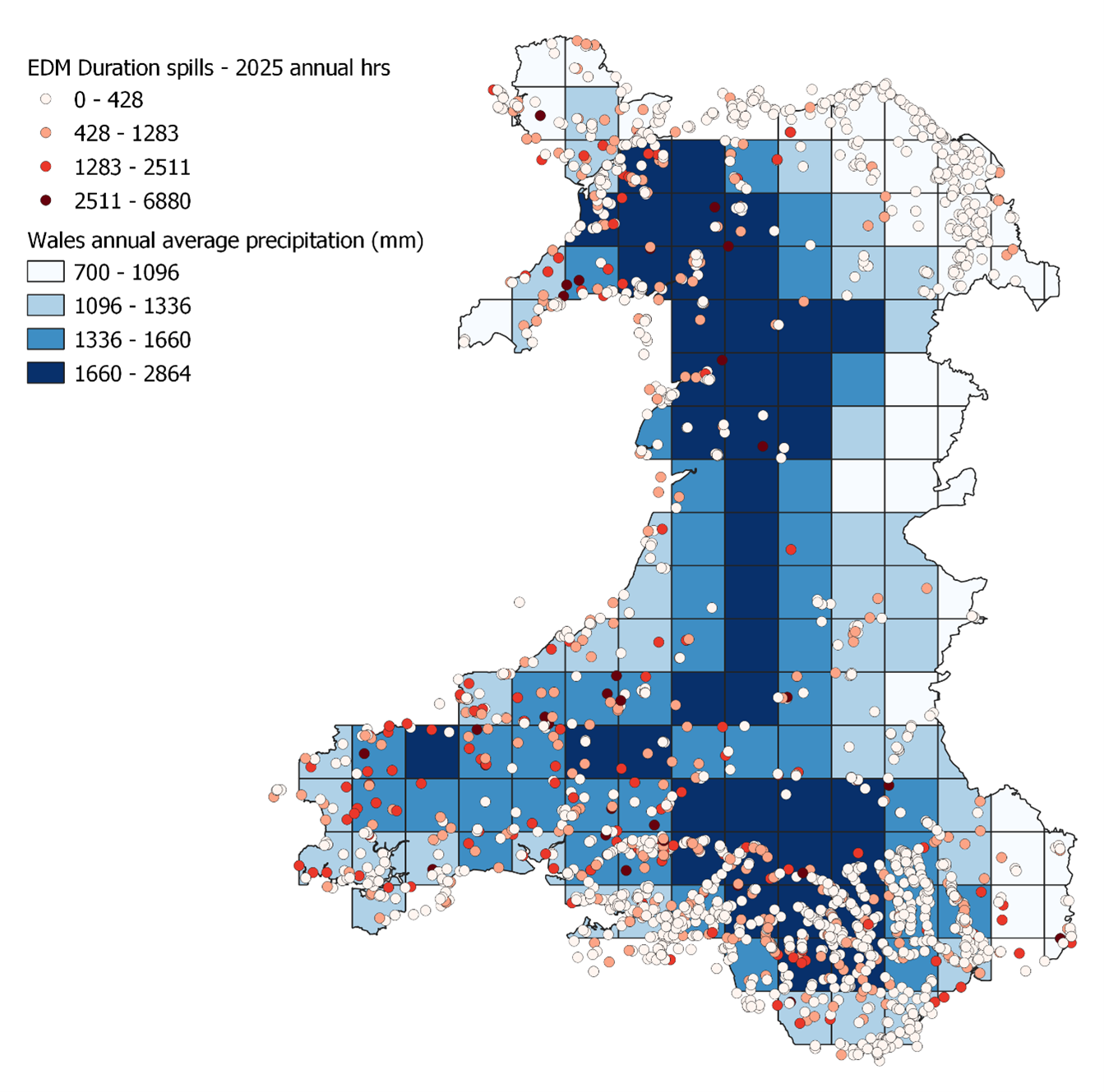
Map 2: The correlation between rainfall in Wales (2021 – 2025) and the number of hours Welsh Water overflows operated.
What does this mean for rivers?
Investment programmes for overflows in Wales should focus on preventing ecological harm to our rivers. However, when overflows operate during dry periods, the ecological risk to rivers is significantly higher. When river flows are lower, there is less dilution of pollutants, increasing the impact of nutrients in raw sewage and greater impacts to fish and wildlife that are already struggling in oxygen depleted river flows.
The 2025 dataset shows quite a different picture of asset failure than previous monitoring data has shown. We have therefore shared this analysis with Welsh Water.
Asset failures during 2025 identify assets which need to be prioritised for asset maintenance and urgent investigation. It shows the need to have more understanding of what drives the failure of overflows in order to deliver the right investment decision. Ensuring that storm overflows operate only when necessary, and not as a routine occurrence, is critical to protecting the health of Wales’s rivers, wildlife and communities.
Written by Afonydd Cymru