
Natural Flood Management in Clear-Felled Forestry
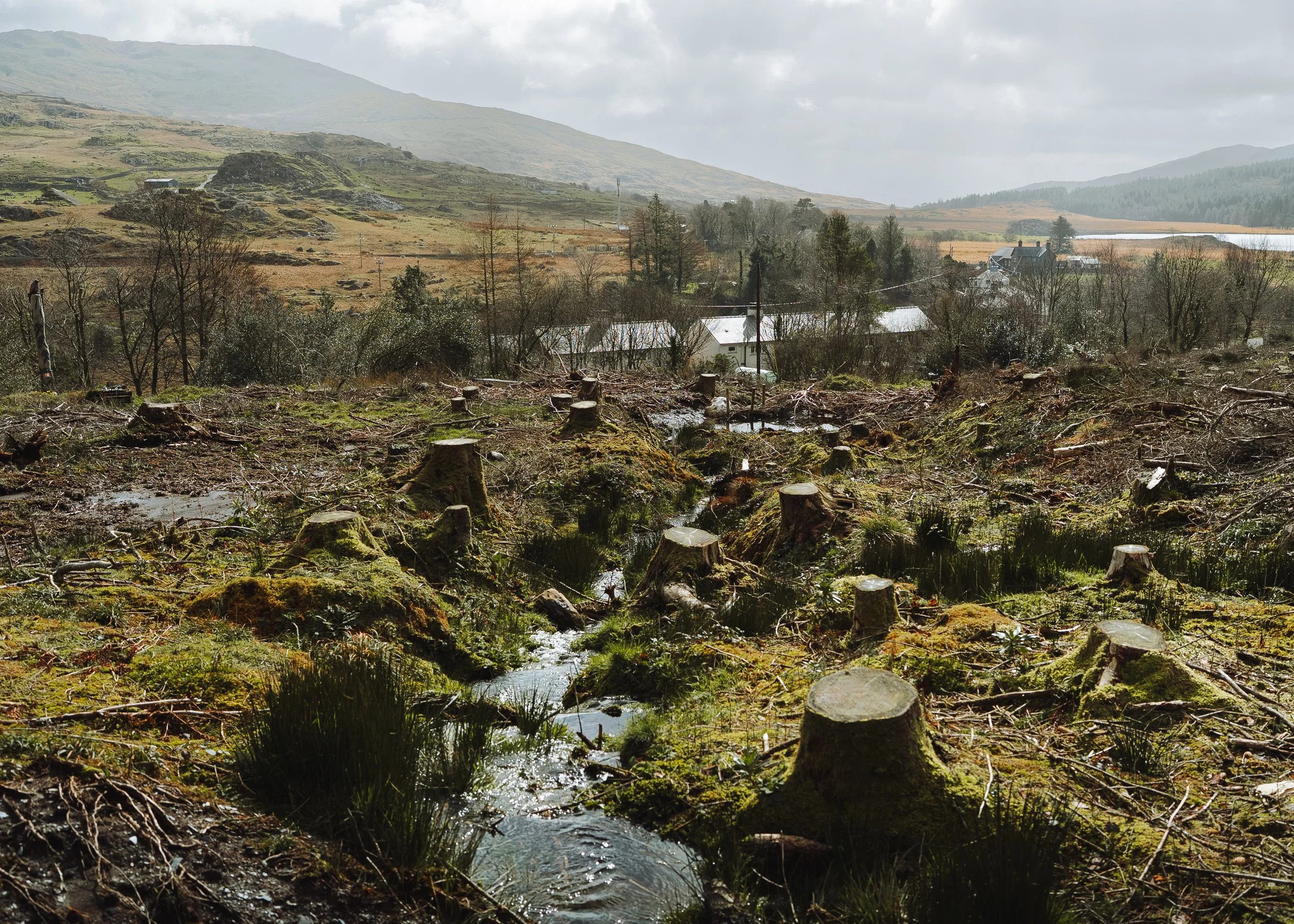
Rhydd Du a site of clear felling impacting PH in the nearby rivers and lakes.
Across upland landscapes in Wales and the UK, many river catchments are dominated by commercial forestry plantations, often consisting of Sitka spruce and other fast-growing conifer species grown for timber production. While forestry plays an important economic role, the harvesting phase — particularly clear-felling — can create significant short-term pressures on nearby freshwater ecosystems.
When large areas of forest are felled, the sudden removal of vegetation exposes soils, alters drainage patterns, and changes how rainfall moves through the landscape. These changes can result in pulses of fine sediment, organic material and acidic runoff entering nearby streams and rivers.
Understanding these processes is critical for protecting fragile upland ecosystems and the species that depend upon them.
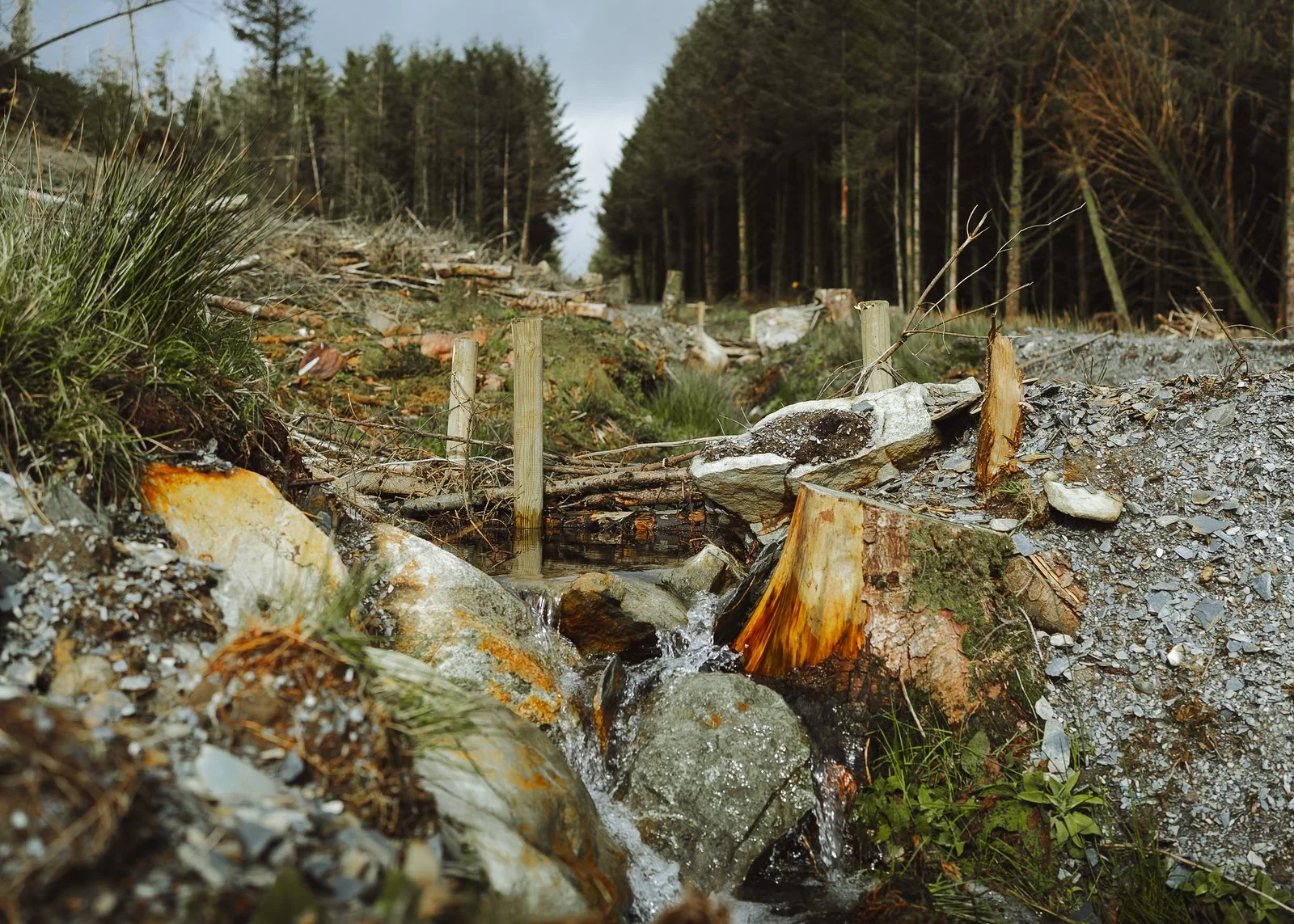
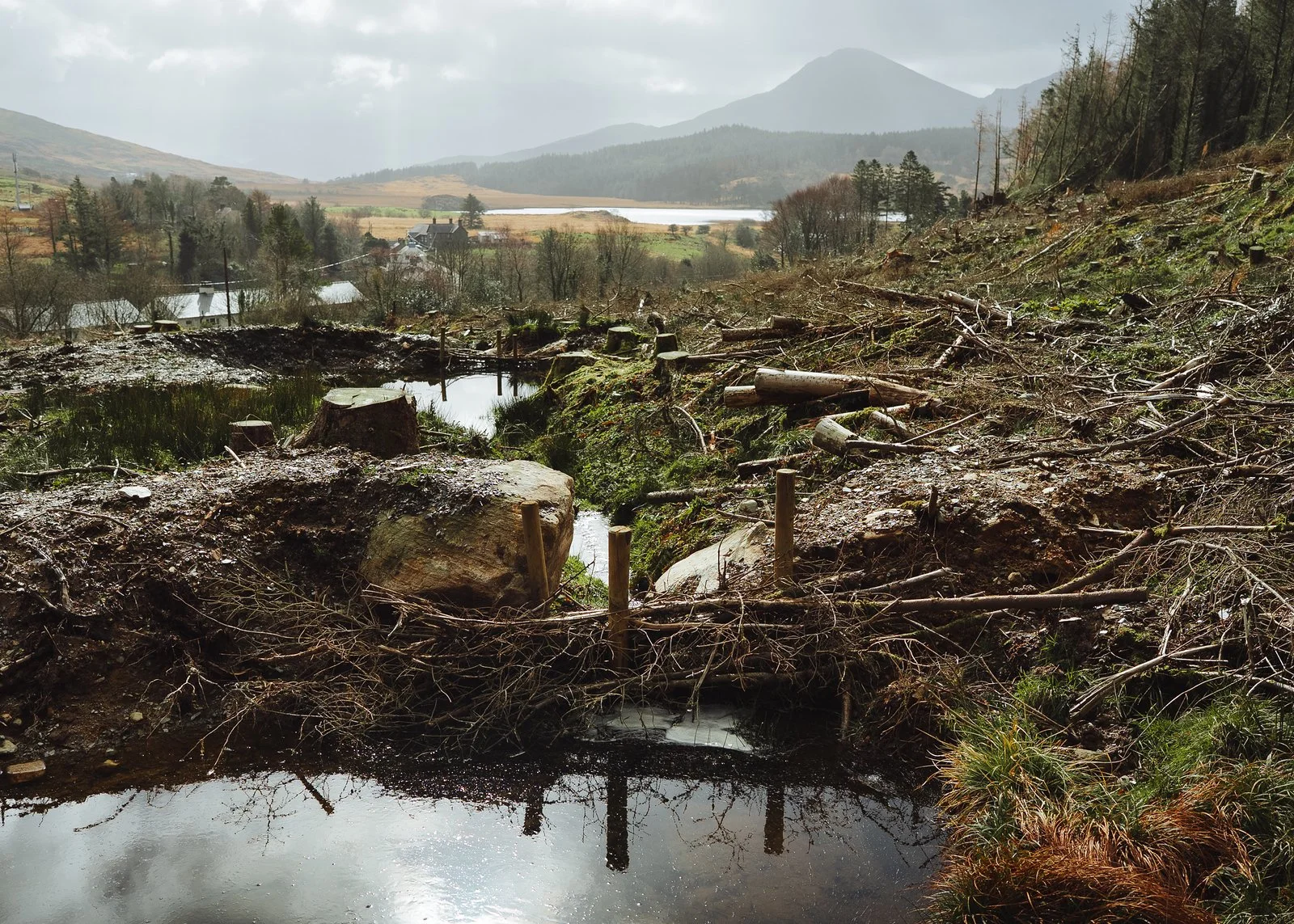
Pools were strategically placed throughout the felled areas, complemented by leaky dams to slow flows and trap sediment.
Commercial conifer plantations can gradually influence soil chemistry over time. Conifer needles decompose slowly and contribute organic acids to the soil surface. In upland areas, where soils are often thin and poorly buffered, this process can lead to acidification of soils and drainage waters.
During rainfall events, water travelling through forestry drains and disturbed soils can carry both acidic runoff and fine sediment downslope toward nearby streams.
This combination can be problematic for freshwater ecosystems. Acidic water can affect aquatic organisms directly, while fine sediment can alter the physical structure of riverbeds and lake substrates.
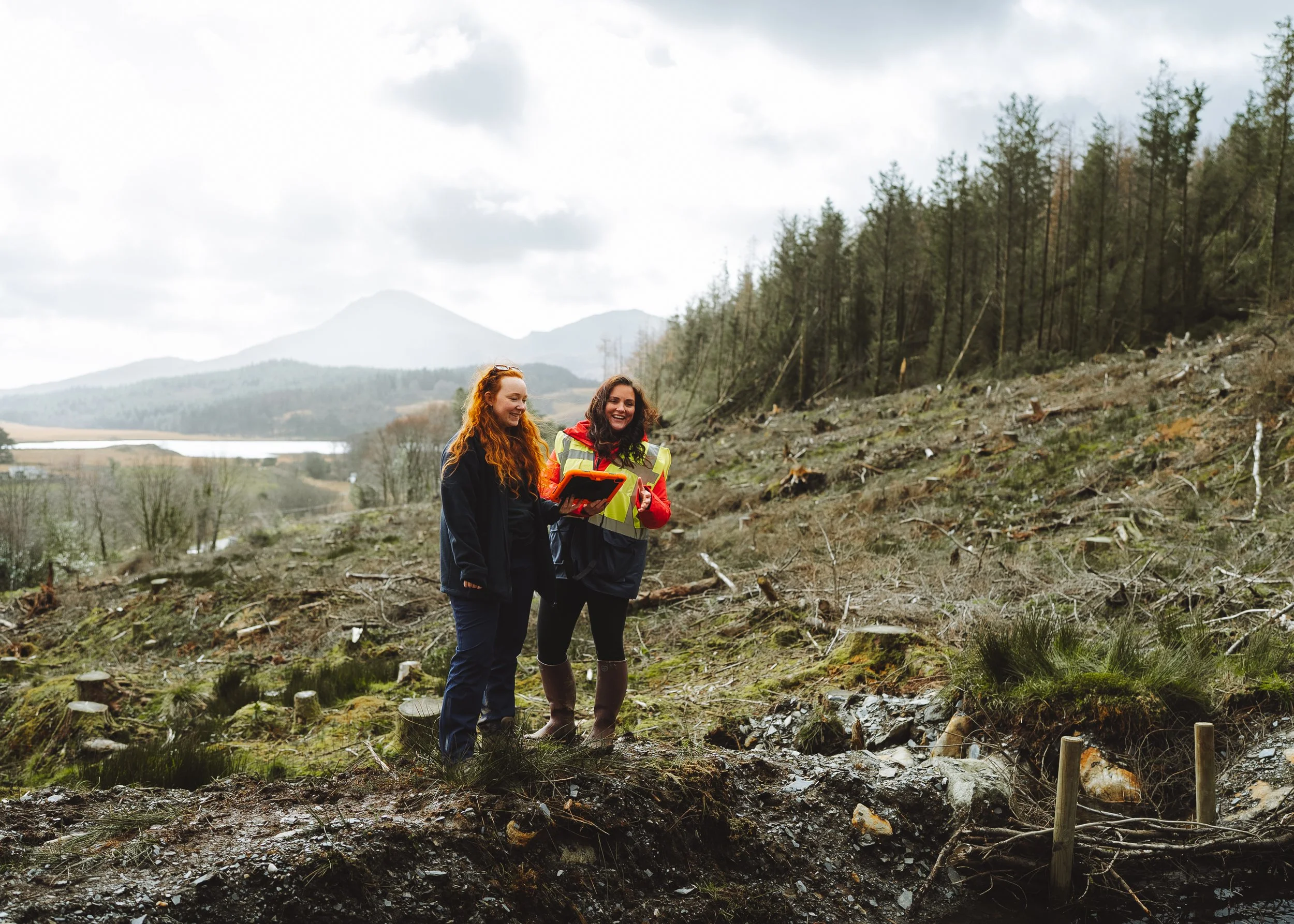
The team on site surveying the impact of interventions
The Role of Sediment in Freshwater Ecosystems
Fine sediment is one of the most significant pressures on freshwater habitats.
In river systems, small particles of silt and clay can settle into gravel beds, filling the spaces between stones where oxygen-rich water normally circulates. This process reduces the availability of oxygen to fish eggs and aquatic invertebrates, which rely on these interstitial spaces for survival.
For species such as salmon and trout, excessive sediment can reduce the success of spawning and limit the survival of juvenile fish. In lakes and reservoirs, sediment inputs can also alter water chemistry and degrade habitats used by cold-water fish species.
For this reason, managing sediment transport within upland catchments is an important component of freshwater conservation.
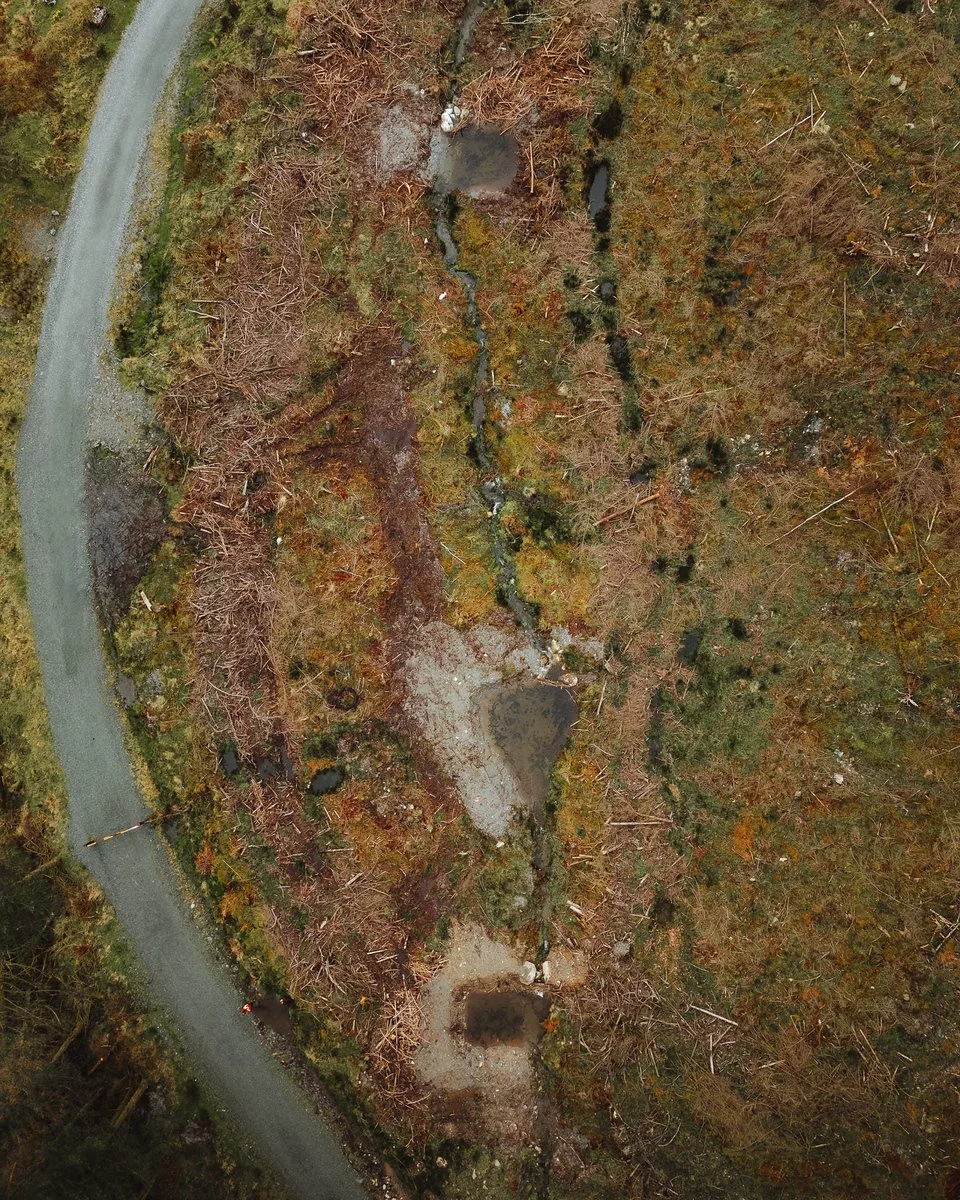
We created a network of pools across the clear-felled area and complemented them with brash leaky dams to slow runoff, capture sediment and improve water retention within the site.
Evidence from the Torgoch Catchment at Llyn Cwellyn
Research carried out as part of the Torgoch Project has focused on the catchment surrounding Llyn Cwellyn, one of the key habitats supporting the Eryri Torgoch (Arctic charr).
Monitoring within the catchment identified elevated acidity levels in water draining through parts of the surrounding forestry landscape, highlighting the influence of conifer plantations and forestry drainage on water chemistry entering the lake.
Because Arctic charr are a cold-water species adapted to very specific environmental conditions, changes in water quality — including sediment inputs and acidity — can pose a risk to the long-term stability of their populations.
This evidence led to the development of practical interventions designed to intercept runoff before it reaches the lake system.
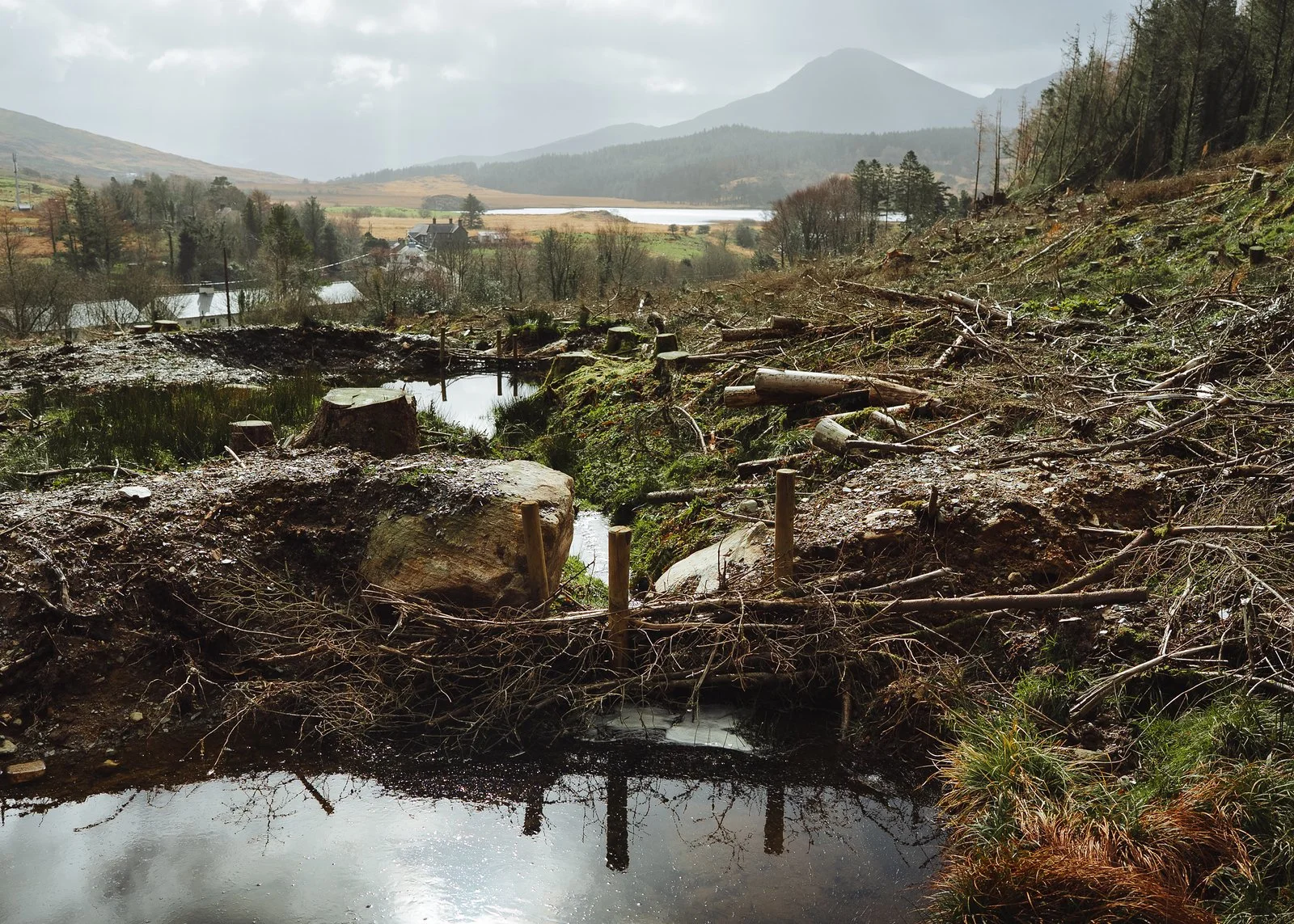
We created pools throughout the clear felled area and complimented them with brash leaky dams to hold back sediment.
Creating Cascading Sediment Pools in Forestry Drains
One element of the project involved creating a series of small cascading pools within forestry drainage channels above the lake.
These pools act as sediment retention features, slowing the movement of water as it flows through the forest.
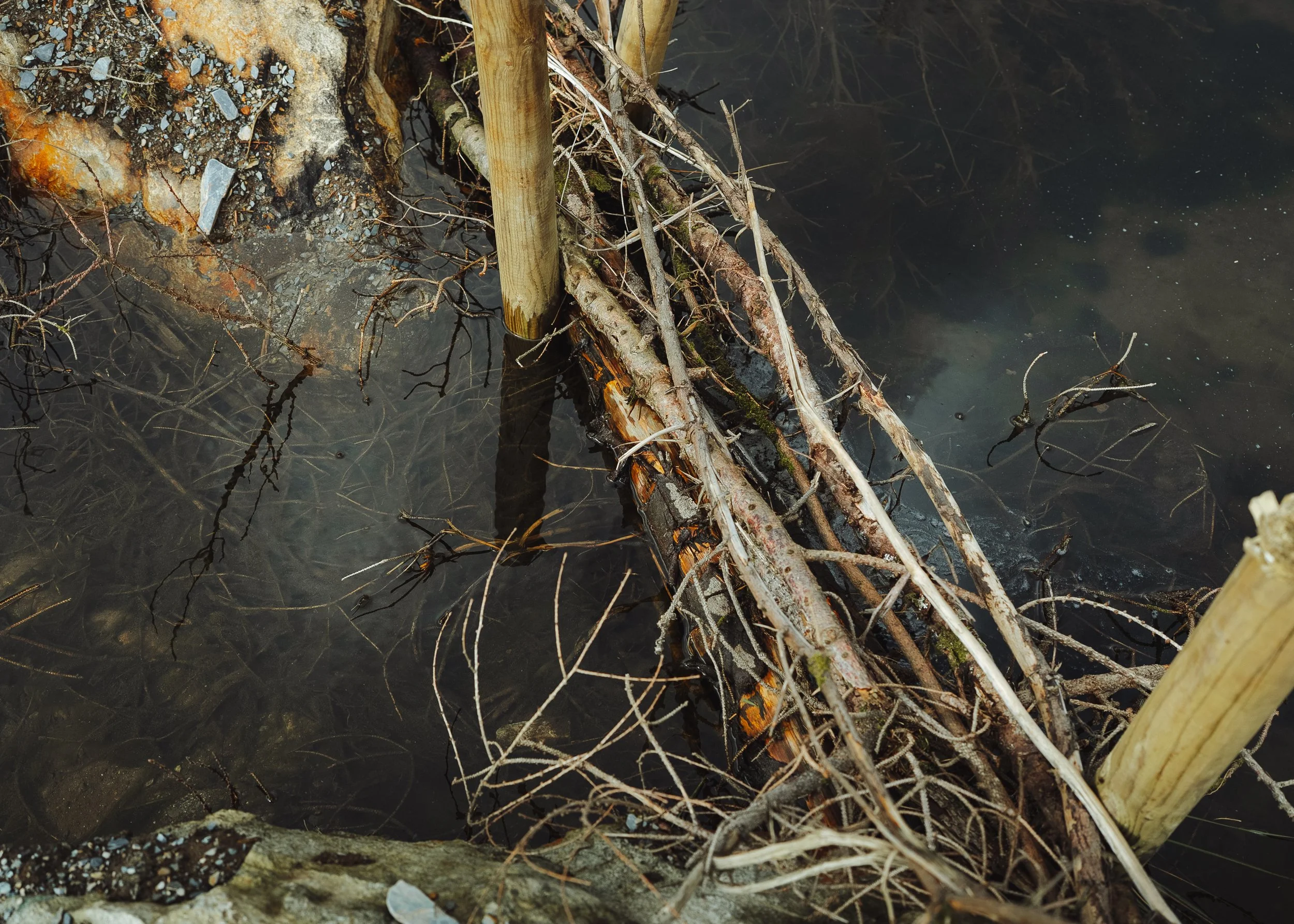
Between each pool, brash hurdles constructed from forestry branches and stakes create partial barriers that reduce water velocity. Unlike solid dams, these structures allow water to pass through gradually while trapping fine sediment and organic material.
As water slows within each pool, suspended particles settle out and accumulate on the bed of the pool rather than continuing downstream toward the lake.
This cascading system effectively functions as a natural filtration process, capturing sediment and reducing the transport of acidic material through the catchment.
Leaky dams and boulder casacades contributing to filtering the water.
Benefits for Arctic Charr and Lake Ecosystems
Reducing sediment and acidic runoff entering Llyn Cwellyn provides several ecological benefits.
Firstly, it helps maintain stable water chemistry within the lake, which is important for sensitive cold-water species such as Arctic charr. These fish require clean, well-oxygenated habitats and are particularly vulnerable to changes in water quality.
Secondly, reducing fine sediment inputs helps protect lakebed habitats and prevents the accumulation of particles that can alter the structure of benthic environments used by invertebrates and other aquatic species.
By intercepting sediment within the forestry landscape, the cascading pools help maintain the clarity, chemistry and ecological balance of the lake ecosystem.
Working with Natural Processes
The interventions implemented through the Torgoch Project are deliberately low-impact and process-based, working with natural hydrological and sediment dynamics rather than attempting to control them through heavy engineering.
By slowing water movement, increasing residence time and encouraging sediment deposition, these small structures help restore a more natural pattern of water flow through the landscape.
Although modest in scale, such interventions can have significant cumulative benefits when implemented across an entire catchment.
Protecting rivers and lakes often begins high in the hills, long before water reaches the main channel or the lake itself.
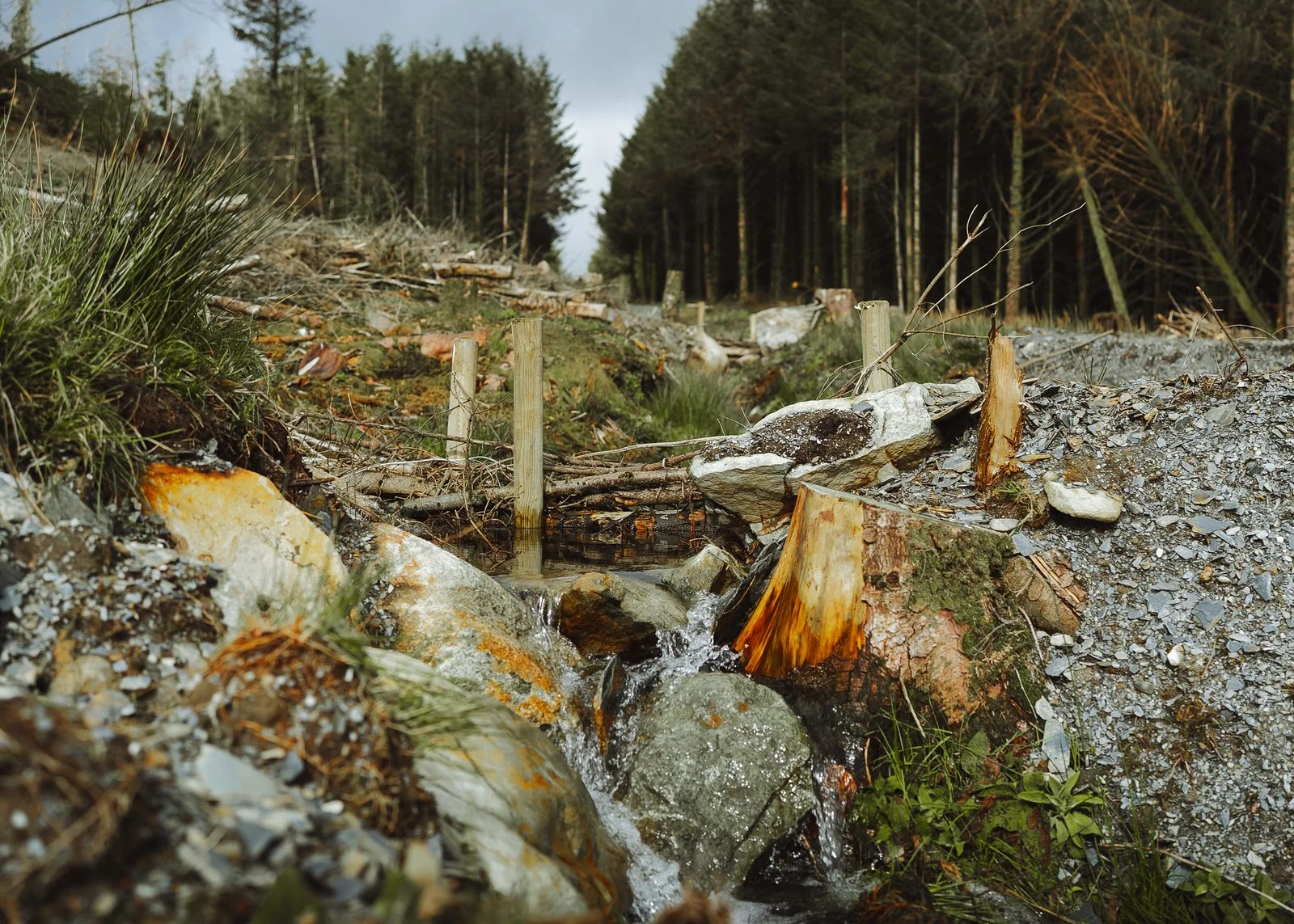
In a forest cascade–pool setting, boulder features can be used to create small cascade steps that slow local flow velocities. This helps encourage sediment sorting, allowing coarser material to settle while finer sediment continues to move downstream.
