The second life of a coffee sack
As an environmental charity working to improve and protect North Wales rivers we’re taking steps to make our work as sustainable as possible by trialling new ways to utilise second hand materials that would otherwise be wasted.
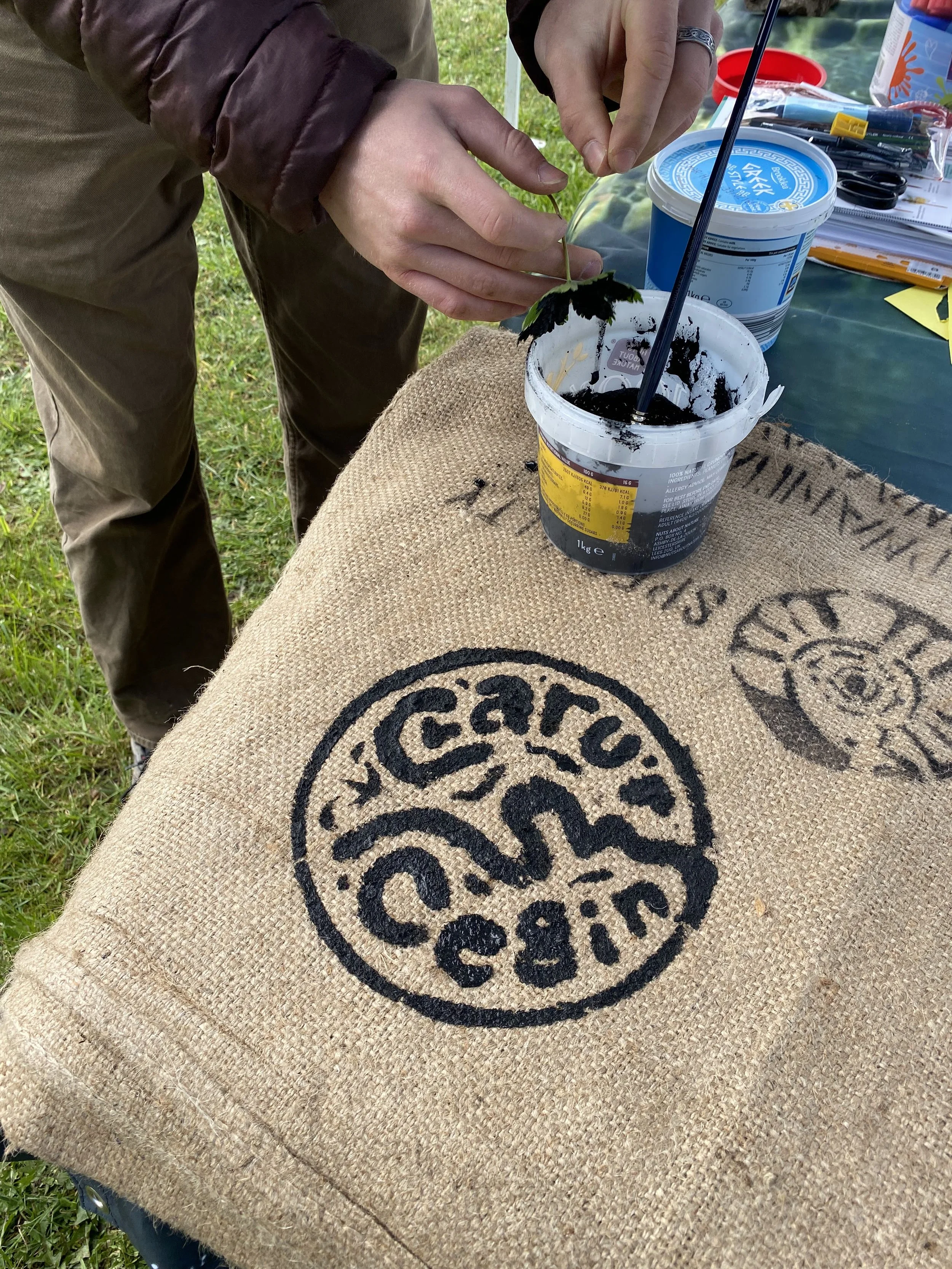
In the UK we drink approximately 98 million cups of coffee per day (British Coffee Association, 2025). These coffee beans travel thousands of miles packed in hessian sacks, a fantastic natural and biodegradable material that is often wasted once its purpose has been served. We're exploring using these spent hessian coffee sacks, filled with biochar, as sediment filter bags placed at strategic points in and around our rivers to help combat pollution.
The pressures on our rivers
Agricultural run-off, legacy drainage schemes and increasingly intense rainfall events have left many of our rivers in less than favourable condition. Solutions can involve costly materials, which is what makes this low-tech idea inspired by the Kuku Biochar Project in New Zealand so worth paying attention to.
What is biochar?
Biochar is made by burning organic matter such as wood, agricultural residues or even coffee grounds at high temperatures with very little oxygen present. The result is a stable, carbon-rich material that looks a lot like charcoal. At a microscopic level it is riddled with tiny pores, giving it a surprisingly vast surface area. As water passes through it, pollutants like nitrates, heavy metals and fine particles bind to its surface and are removed from the flow. It is, in effect, a natural filter that can be made from waste materials, costs very little to produce, and lasts for hundreds of years in the ground.
Circularity
Conservation is about working with natural systems rather than against them and we can apply this same method of thinking to the materials and methods we use. The challenges facing our rivers are not going to be solved by any single approach, but there is something to be said for trialling solutions that generate no new waste and can unite people across different sectors.
A big thankyou to Poblado coffi for supplying us with the sacks to trial this new approach.