Reintroducing Aspen to Our River Corridors
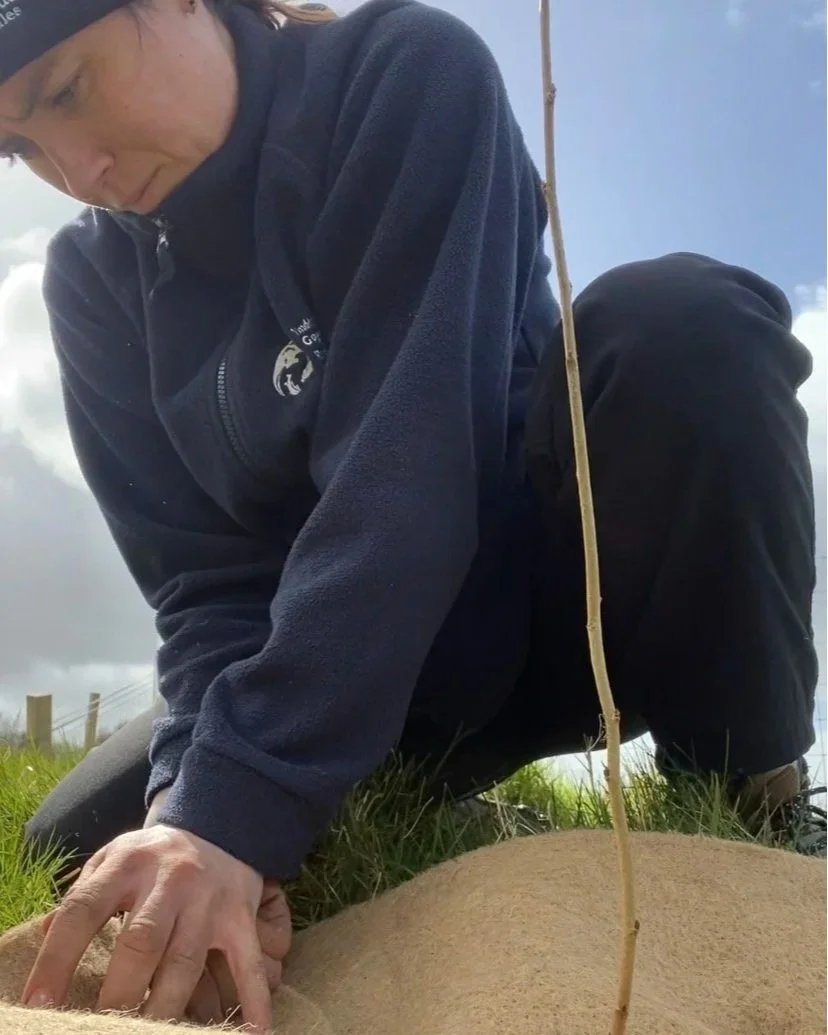
As part of our Roots project we’ve been creating habitat corridors within the Afon Cegin catchment. This has involved working with landowners to create riparian buffer strips that exclude livestock from the river - an intervention that reduces pollution and sedimentation in our rivers. Within these strips we’ve been planting native trees, to help provide benefits like shade and stabilisation to the river and the wildlife it supports.
As well as the standard mix of native trees you would expect to see alongside the river like willow, birch and alder we’ve been planting locally sourced Aspen. Aspen (Populus tremula) is a member of the poplar genus and copes well by rivers. Over time it has become an increasingly rare sight across Welsh landscapes, likely due to grazing pressure. It has a fascinating ecology where it reproduces primarily through root suckering — sending up new shoots from its root system rather than relying on seed. This means that when grazing animals repeatedly browse the suckers, the tree is prevented from spreading and regenerating naturally, leading to isolated, ageing individuals clinging on in rocky outcrops and other places livestock can't easily reach.
This means that only a few aspen trees remain in many areas, often cut off from one another and unable to form the clonal colonies they naturally would. For the last couple of years, conservationists from Wild Resources ltd in North Wales have been taking cuttings and clones from these remaining trees and growing them on in nurseries within the Cegin catchment, ensuring that the genetic material of locally adapted trees is preserved and that the plants we put back into the landscape are truly of local origin, giving them the best possible chance of thriving long into the future. We were pleased to have the opportunity to include these trees in our latest Cegin scheme and look forward to monitoring their success for years to come.