
Nature-Based Solutions for Mine Catchments
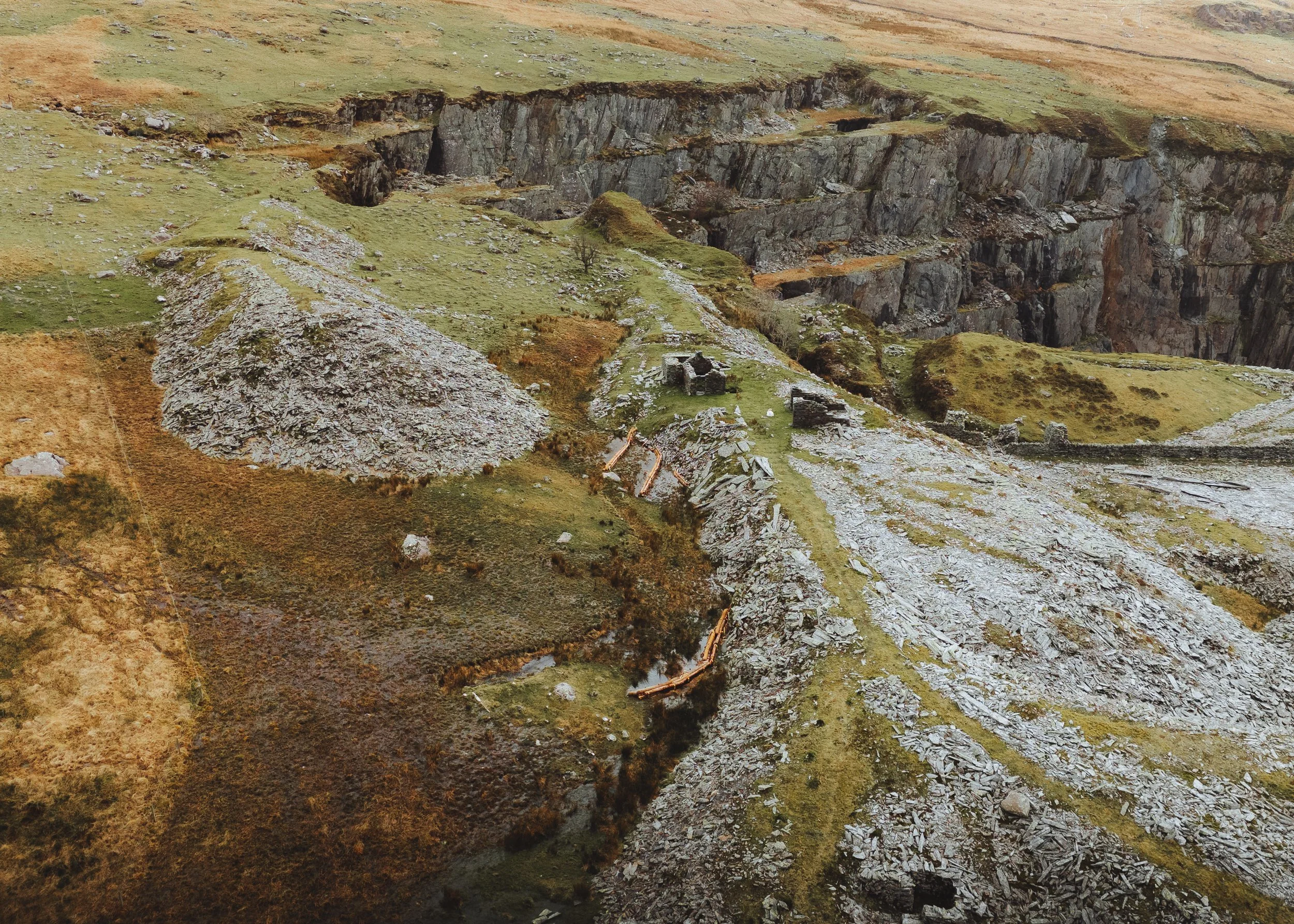
Leaky dams intercepting surface run off and diverting flow around the spoil.
Many upland areas of Wales have a long history of mining, particularly for metals such as copper, lead and zinc. These historic workings have left a legacy across the landscape in the form of spoil heaps, drainage channels and altered streams. In many places, water running through old mine workings can become acidic and carry dissolved metals into nearby rivers.
However, not all mining landscapes behave in the same way. In this project area the historic workings are primarily associated with slate extraction, which tends to be closer to pH neutral compared with many metal mines. While this means the water is not typically highly acidic, the large volumes of loose slate spoil can still create environmental problems.
The primary issue associated with slate spoil is rapid surface runoff and sediment mobilisation. The loose, unconsolidated nature of spoil material allows rainfall to move quickly over the surface of the spoil heaps, entraining fine sediments which are subsequently transported into nearby streams. This process can increase turbidity, smother benthic habitats and alter channel morphology, negatively affecting aquatic ecosystems.
To address these issues, a series of Natural Flood Management (NFM) measures in the form of leaky dams and woody flow attenuation structures have been installed within small headwater channels upstream of and adjacent to spoil areas. These structures are designed to reduce flow velocities, attenuate peak runoff and increase local water retention within the catchment.
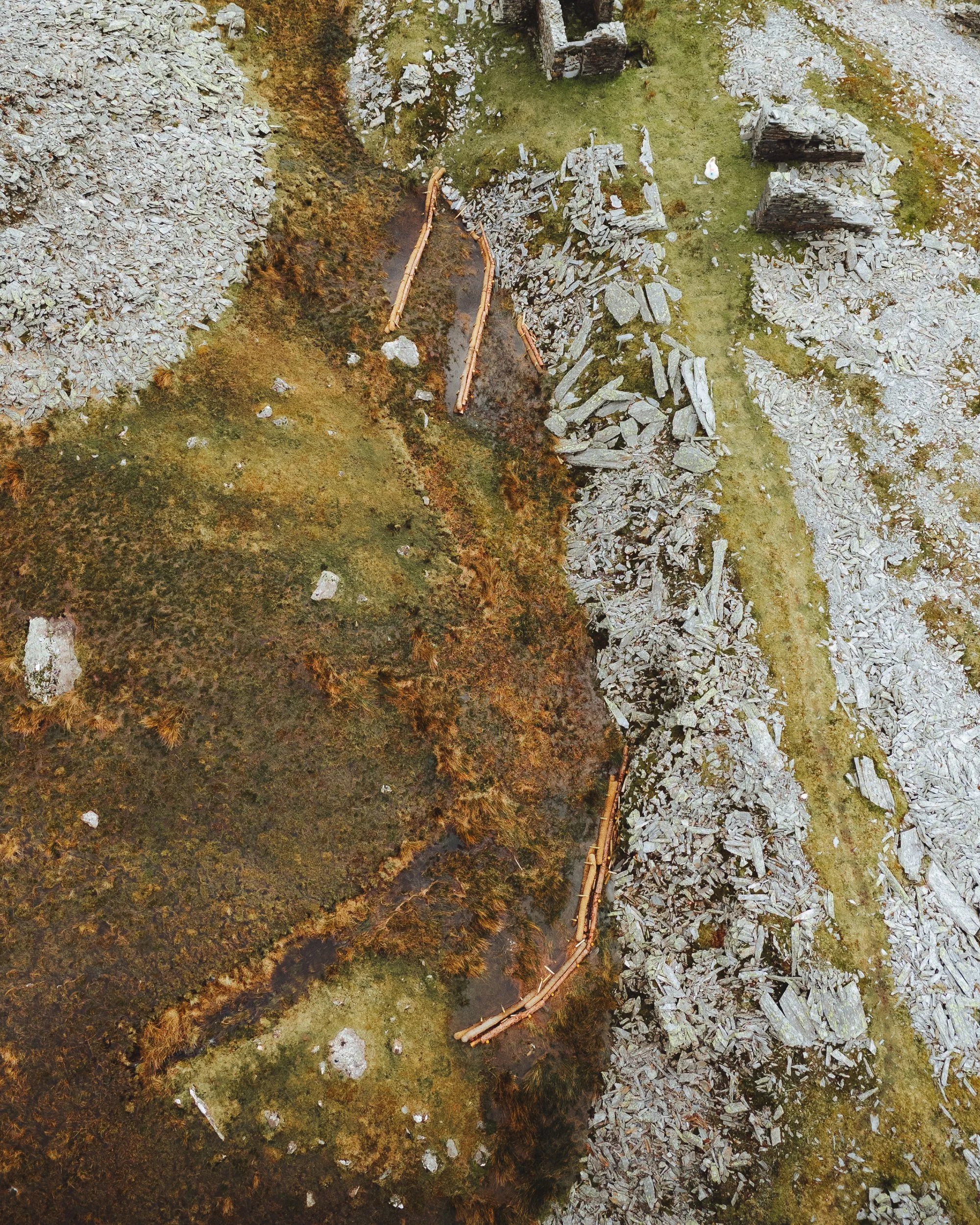
A drone shot of the log dams and coir bunds.
As can be seen in the image above, the installed leaky dams and associated bunds are creating a series of small wetted areas and shallow pools upstream of the structures. These areas temporarily store water during rainfall events and maintain damp or standing water conditions for longer periods. The resulting habitat has already begun to support a range of aquatic life, with the pools providing suitable breeding and refuge habitat for aquatic insects and amphibians, including the presence of frog spawn.
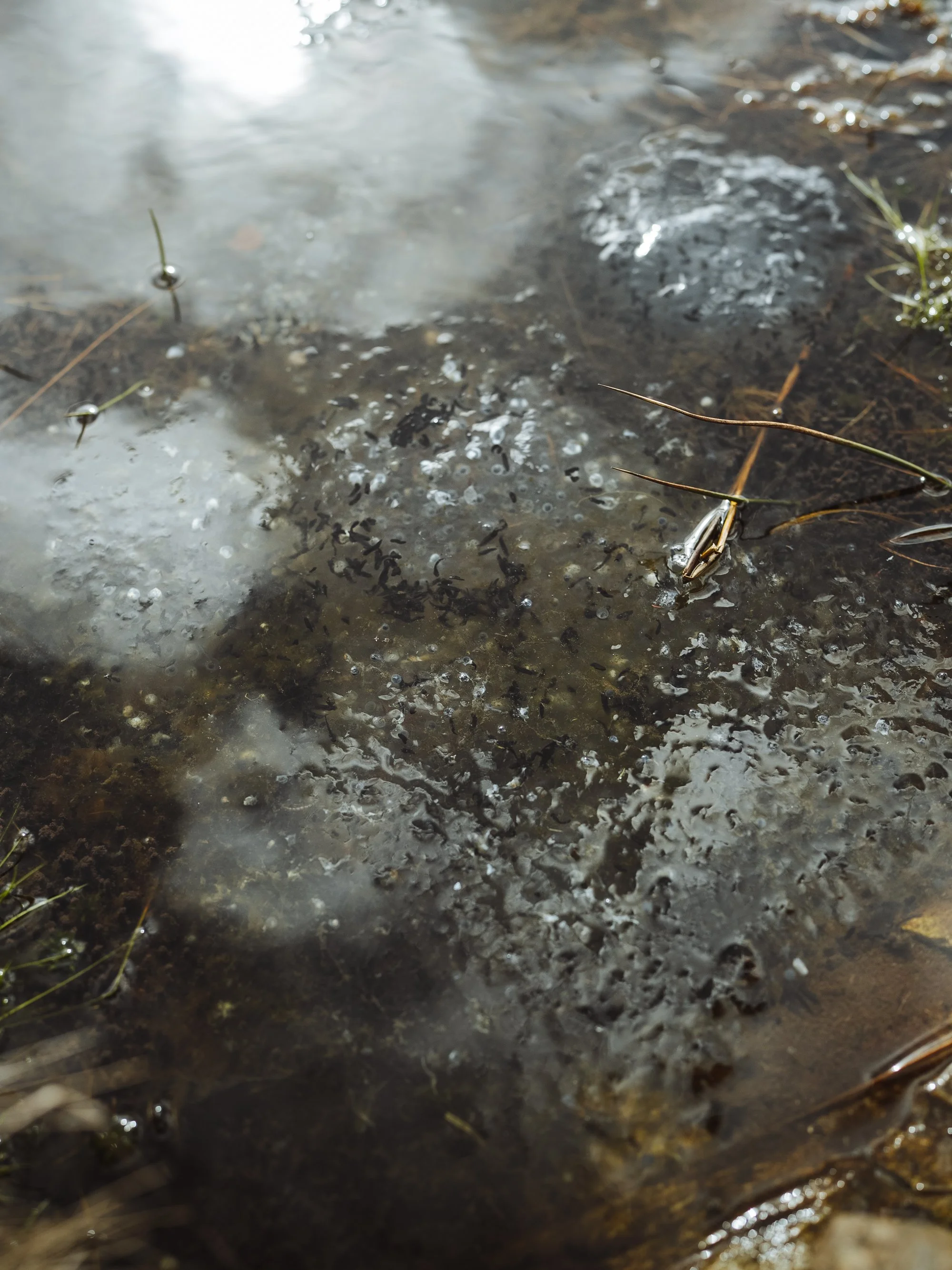
Frog spawn in the new pools created from the surface run off.
Leaky dams function by allowing water to pass through the structure while creating a partial obstruction that slows flow during rainfall events. This results in the formation of small upstream impoundments and areas of temporarily stored water. The reduction in flow energy promotes sediment deposition within the channel system, thereby limiting the downstream transport of fine sediments originating from spoil surfaces.
From an ecological perspective, these interventions provide several benefits for freshwater fish populations. Reduced sediment delivery helps to protect spawning gravels and benthic habitats, which are essential for species such as salmonids that require clean, well-oxygenated substrates for successful reproduction. Fine sediment deposition within spawning gravels can reduce interstitial flow and oxygen availability to developing eggs, leading to reduced survival rates.
By slowing runoff and trapping sediments upstream, the NFM structures help maintain cleaner gravel substrates and improved habitat quality downstream.
