
Freshwater Pearl Mussel Project – Phase Two Update
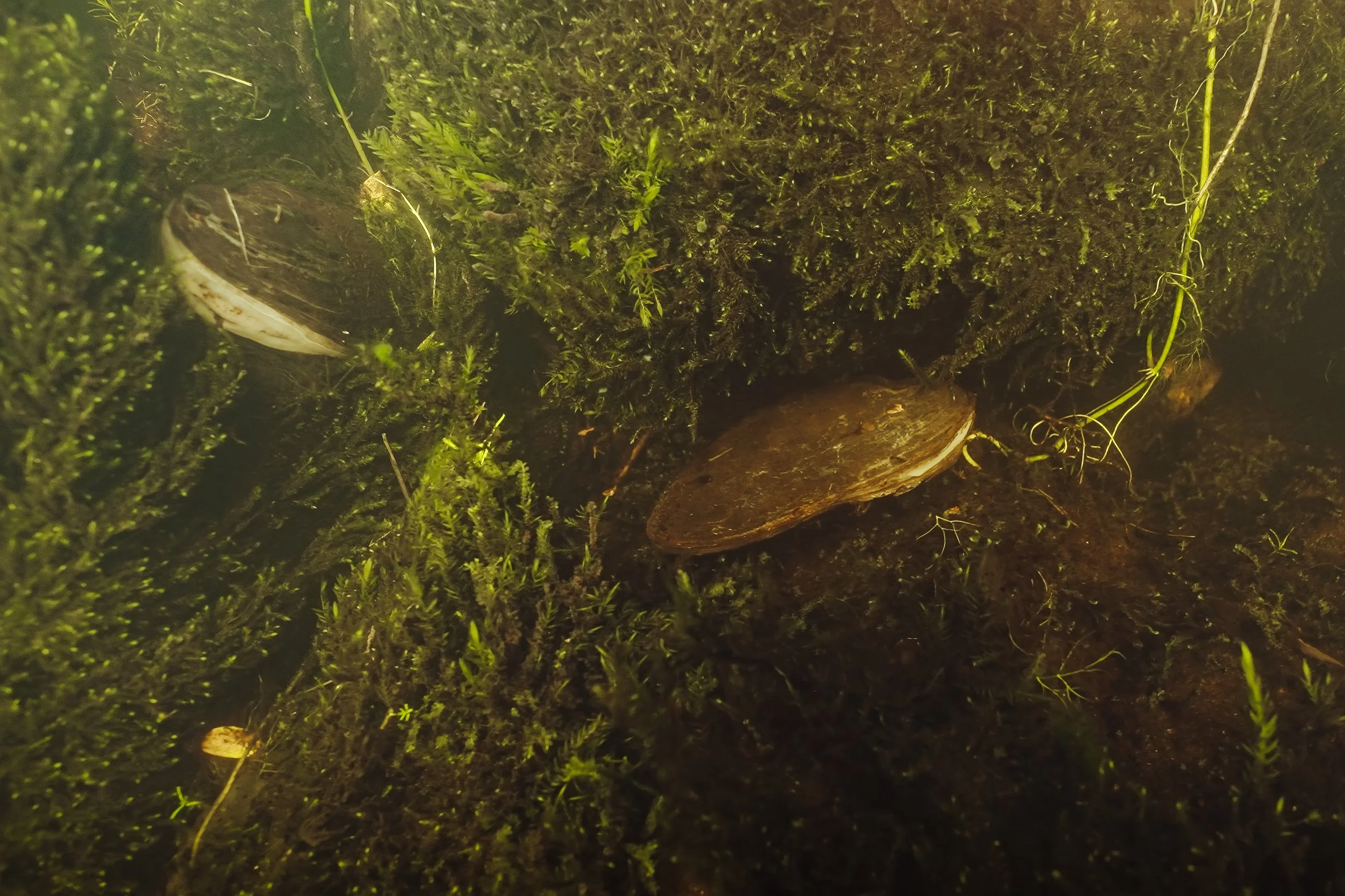
Freshwater Pearl Mussels on the Mawddach nestled in the thick mats of weed
Our work to protect and restore populations of the Freshwater pearl mussel has continued this month, building on the solid foundations already put in place during phase one.
This is long-term, technical restoration work focused on improving river processes, habitat condition, and public understanding of one of the UK’s most endangered native species.
Earlier in the project, we completed a number of key interventions:
Removed a small weir to restore fish passage
Installed hundreds of tonnes of spawning gravels to support salmon and trout
Placed boulders strategically to diversify flow and create scour
Identified and flagged a broken sewage pipe that had been impacting water quality
These actions were designed around a simple principle: if we restore conditions for fish, we restore conditions for freshwater pearl mussels.
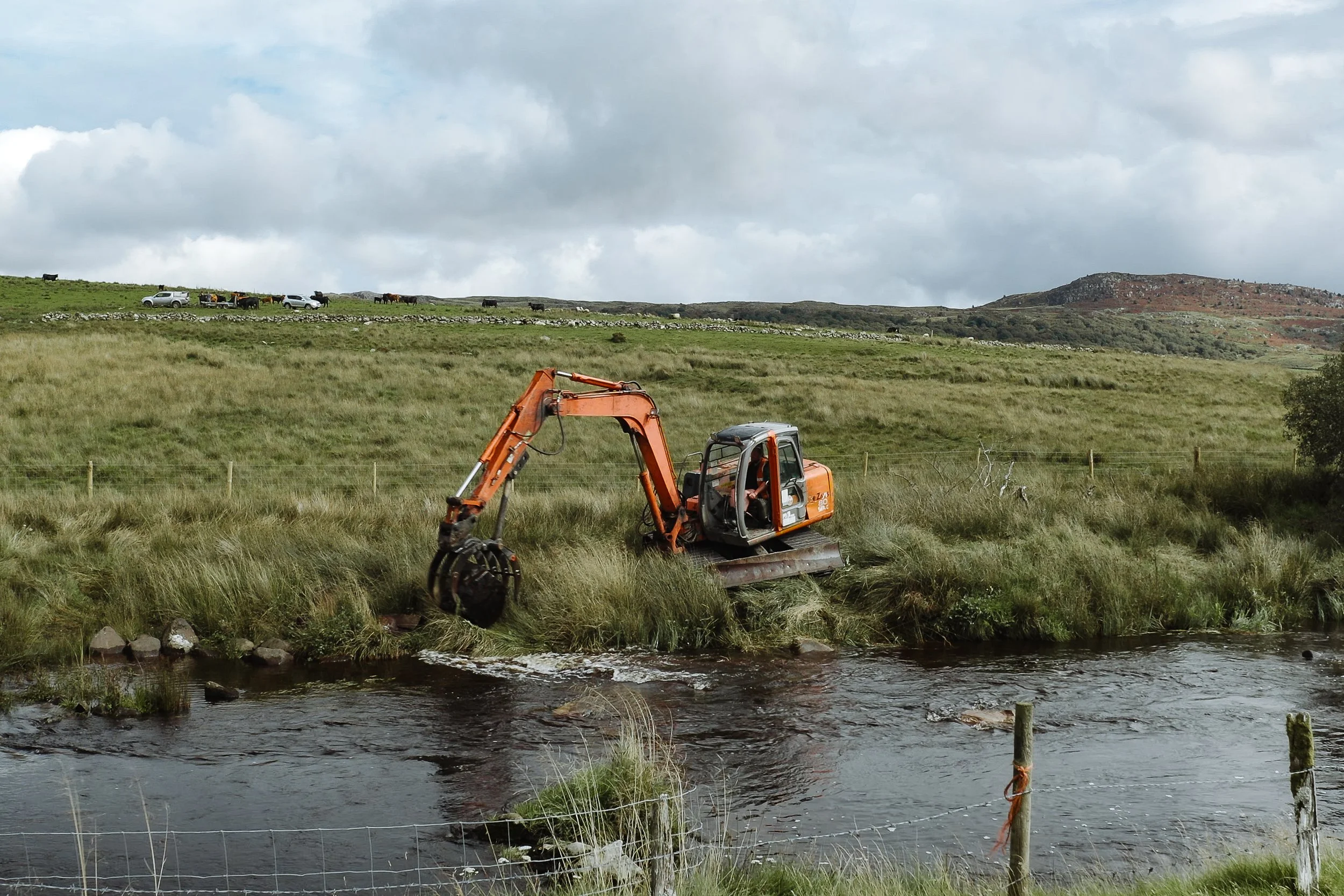
Phase One & Two: What we’ve delivered
Habitat and river restoration
Continued in-channel improvements, including boulder placement to refine flow diversity and maintain clean gravels
Addressed excessive weed growth linked to nutrient pollution, following identification of a sewage input
Expanded spawning habitat to support salmon and trout populations
Riparian and catchment work
Created new riparian woodland corridors, planting sessile oak, willow, and alder
Designed planting to:
stabilise banks
provide future woody material to the channel
increase shading and habitat complexity
Restored hectares of wetland and quaking bog, improving hydrology and natural water storage
Carried out peat depth surveys to map deep peat and guide future interventions
Installed road runoff ponds to monitor pollutants entering the system from nearby roads, particularly during summer low flows when impacts are most acute
Why this matters
Freshwater pearl mussels are entirely dependent on salmon and trout during their life cycle. Without healthy fish populations, mussels cannot reproduce.
The work delivered in this phase supports:
Cleaner gravels for fish spawning
Improved flow conditions to prevent silt build-up
Reduced nutrient impacts from pollution sources
Better-connected habitat across the catchment
This is about restoring the system, not just the species.
Education and community involvement
Alongside the practical work, we’ve continued to invest in local engagement:
Developed a project book with local school children
Worked with the Prysor Angling Association, who:
delivered educational sessions
hosted visits to their hatchery
introduced pupils to fishing and river stewardship
This work ensures that restoration is understood and supported locally.
What’s next
We are now recruiting Freshwater Pearl Mussel Ambassadors.
This network will:
raise awareness of the species
support monitoring and citizen science
act as local advocates for river conservation
Complete the form below if you would like to become an Ambassador.
