
Abseiling Into Gullies to Tackle Invasive Species
Restoring Our Rivers from the Source
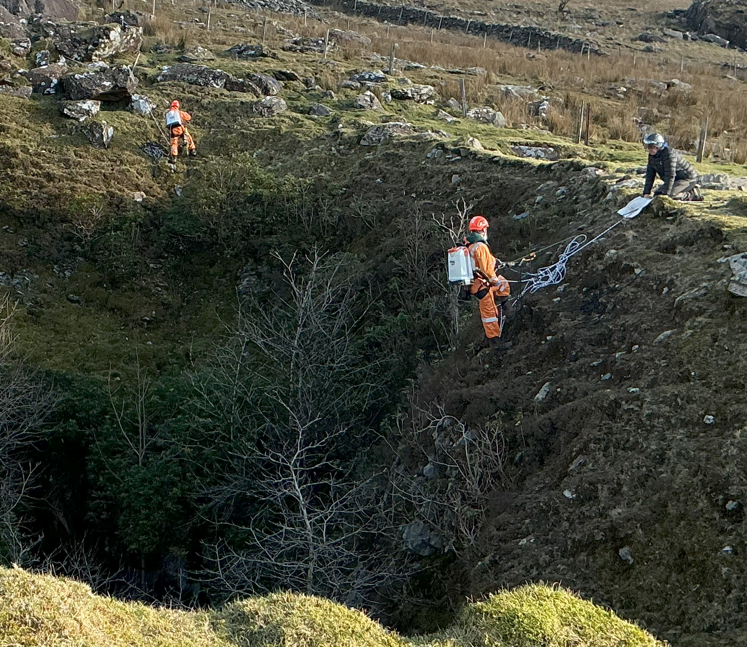
Descending into the gully
Over the past few months, we’ve been working to tackle one of the most damaging invasive non-native species (INNS) in our upland river catchments: Rhododendron ponticum.
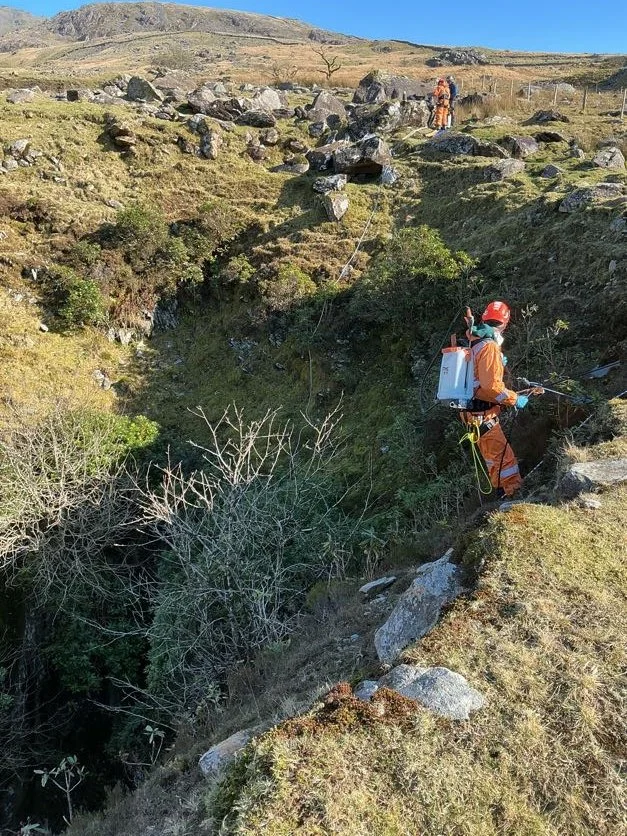
This has involved ropes, helmets, harnesses – and abseiling into steep, unstable gullies to remove rhododendron from places that are otherwise completely inaccessible.
Why Are We Abseiling Into Gullies?
Many of our upland catchments in North Wales are steep, wooded and deeply incised. Over decades, rhododendron has colonised these gullies, forming dense, impenetrable thickets along fragile slopes above streams.
You can’t just walk in and cut it back.
These areas are:
Extremely steep
Prone to slips and erosion
Often directly above sensitive headwater streams
So the only safe and effective way to remove it is by specialist rope access teams carefully working their way down the slopes.
Kehoe Countryside have brought the technical skill and confidence to operate in these environments safely and efficiently.
Why Removing Rhododendron Matters for River pH
Rhododendron ponticum has several damaging effects:
1. It acidifies soils and water
Rhododendron produces acidic leaf litter that:
Decomposes slowly
Releases organic acids
Leaches into already sensitive upland soils
In headwater catchments – where buffering capacity is low – this can contribute to lowering pH in streams.
In some of our tributaries, we are already recording pH levels around 5 in upper reaches. That is stressful – and sometimes lethal – for species such as:
Salmon fry
Trout
Aquatic invertebrates
Freshwater pearl mussels
Lower pH can mobilise aluminium in soils, which then washes into streams and becomes toxic to fish gills.
Removing rhododendron reduces the long-term acid load entering these systems.
2. It blocks light and suppresses native vegetation
Rhododendron creates dense evergreen shade year-round. This:
Prevents native ground flora from growing
Stops natural woodland regeneration
Reduces root diversity that would otherwise stabilise soils
Limits varied leaf litter inputs that help buffer stream chemistry
Healthy native woodland contributes to more balanced nutrient cycling and better water quality. A monoculture of rhododendron does the opposite.
3. It increases erosion risk
In steep gullies, rhododendron’s shallow root system does little to stabilise slopes compared to deep-rooted native trees.
When heavy rainfall hits:
Bare acidic soils can erode
Sediment enters streams
Spawning gravels become smothered
By removing rhododendron and encouraging native woodland recovery, we improve slope stability and protect downstream habitats.
Why headwaters matter
Headwaters are small, but they are powerful.
They set the chemical and ecological baseline for the entire river system. If we allow acidifying invasive species to dominate here, we undermine everything happening downstream — from salmon restoration to freshwater mussel recovery.
Tackling INNS at source is one of the most strategic things we can do for long-term river resilience.
The bigger picture
This work is physically demanding, technically challenging and often unseen. There are no big machines, just skilled teams quietly descending into steep, moss-covered gullies to remove a plant that should never have been there.
But the impact will last for decades.
By restoring native woodland structure and reducing acidifying inputs, we are:
Improving stream pH buffering
Supporting fish survival
Protecting sensitive invertebrates
Reducing sedimentation
Building climate resilience into upland catchments
