
Launching the Menai Source-to-Sea Observatory
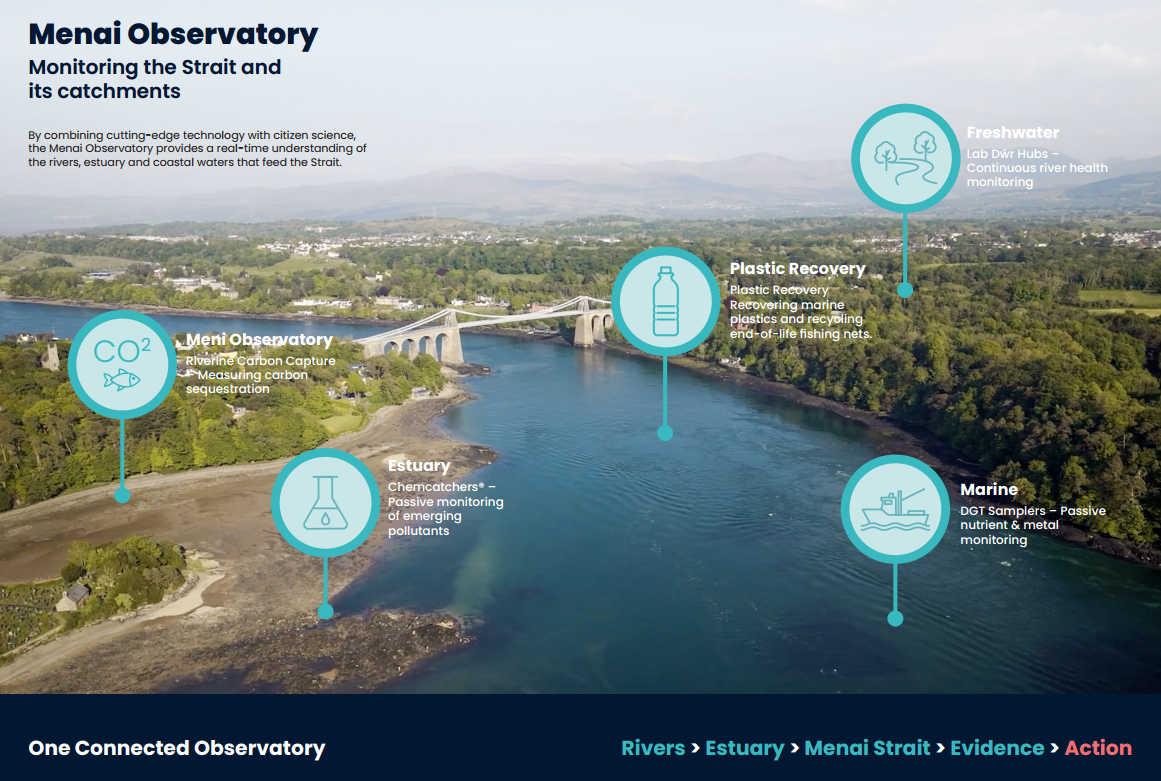
We're pleased to announce the launch of the Menai Observatory Source-to-Sea Catchment. An ambitious new initiative that will transform how we understand and protect the waters of North West Wales.
Thanks to £100,000 of funding from the Welsh Government, we are launching an intensive water quality monitoring programme that follows water on its journey from the uplands of Eryri, through our rivers and estuaries, and into the Menai Strait.
This project is about filling the knowledge gaps. At present, only 19 monitoring points across the bioregion contribute to Water Framework Directive (WFD) assessments. While these sites provide valuable information, they simply cannot capture the full picture of what is happening across such a diverse and complex catchment. To make informed decisions, we need better data, collected more widely and more frequently.
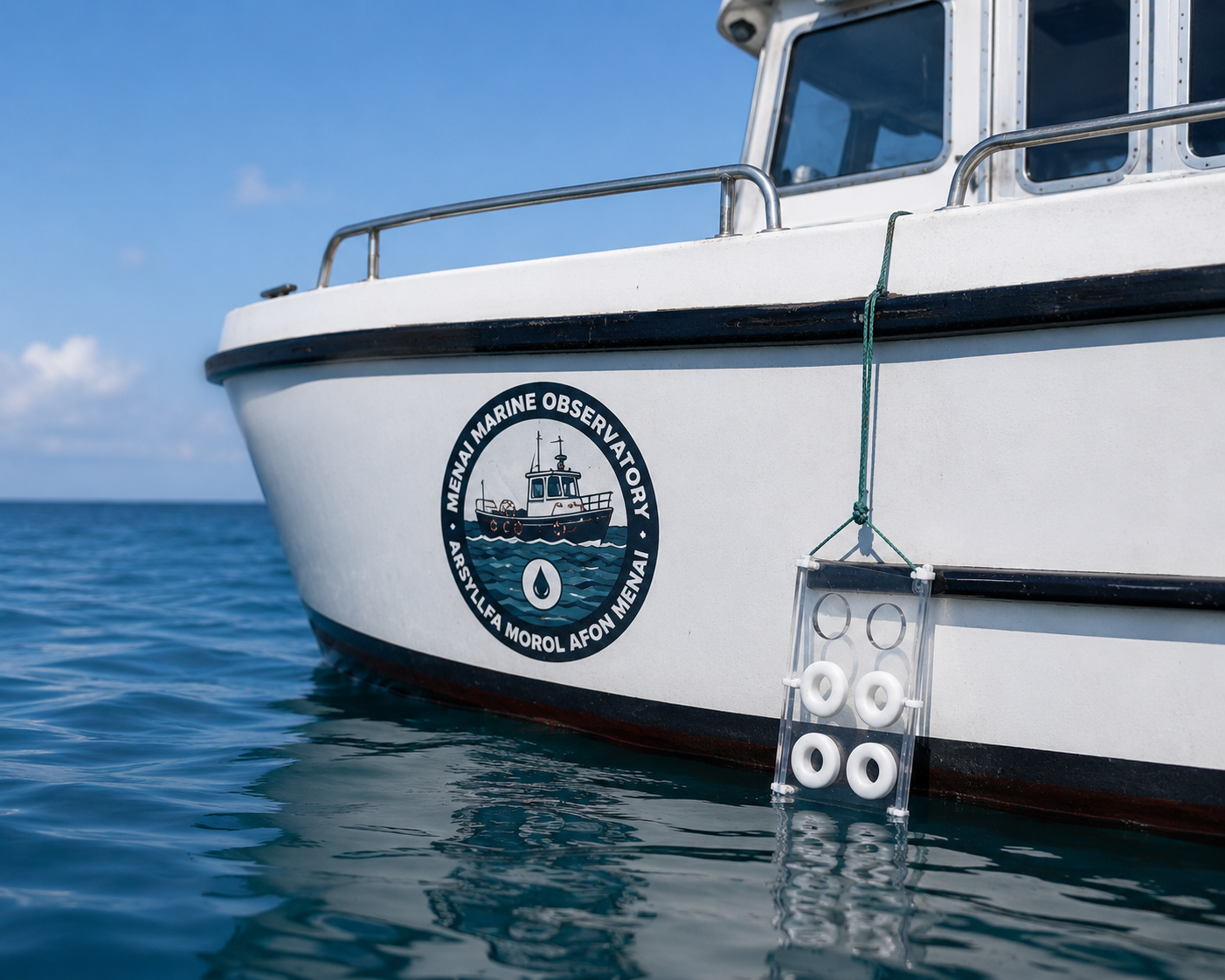
The new programme will use automated DGT (Diffusive Gradients in Thin Films) samplers deployed from boats to measure the cumulative impact of nutrients and pollutants throughout the Menai Strait. Unlike traditional spot sampling, DGT technology provides a time-integrated picture of water quality, helping us identify pollution hotspots and understand how contaminants move through the marine environment.
In our estuaries, we will install Chemcatcher® passive samplers to detect a wide range of chemicals, including pharmaceuticals associated with wastewater treatment works, alongside pesticides, industrial compounds and other contaminants linked to land use. These samplers will provide valuable insight into the sources of pollution affecting freshwater ecosystems.
The project will also strengthen freshwater monitoring through our Lab Dŵr programme working alongside volunteers, local communities and partners to collect high-quality environmental data across the catchment. By combining professional monitoring with citizen science, we can build one of the most comprehensive pictures ever assembled of water quality in the region.
But the project doesn't stop at monitoring, because alongside it we're launching a new network of fishing line and fishing net recycling bins, working with the fishing industry, recreational anglers and the aquaculture sector to reduce the amount of plastic waste entering our rivers and seas, since lost fishing gear and discarded line continue to pose a real threat to wildlife long after they're abandoned. This initiative offers a practical way to keep those materials out of the environment altogether, recycling them responsibly instead of leaving them to drift, snag and break down where fish, birds and marine mammals can become entangled in them.
By bringing together cutting-edge monitoring, community science and practical action, the Menai Observatory is building a true source-to-sea approach, one that recognises every river, stream and estuary as part of a single connected system, because it's only by understanding those connections that we can hope to improve water quality and restore the health of the ecosystems that depend on it.
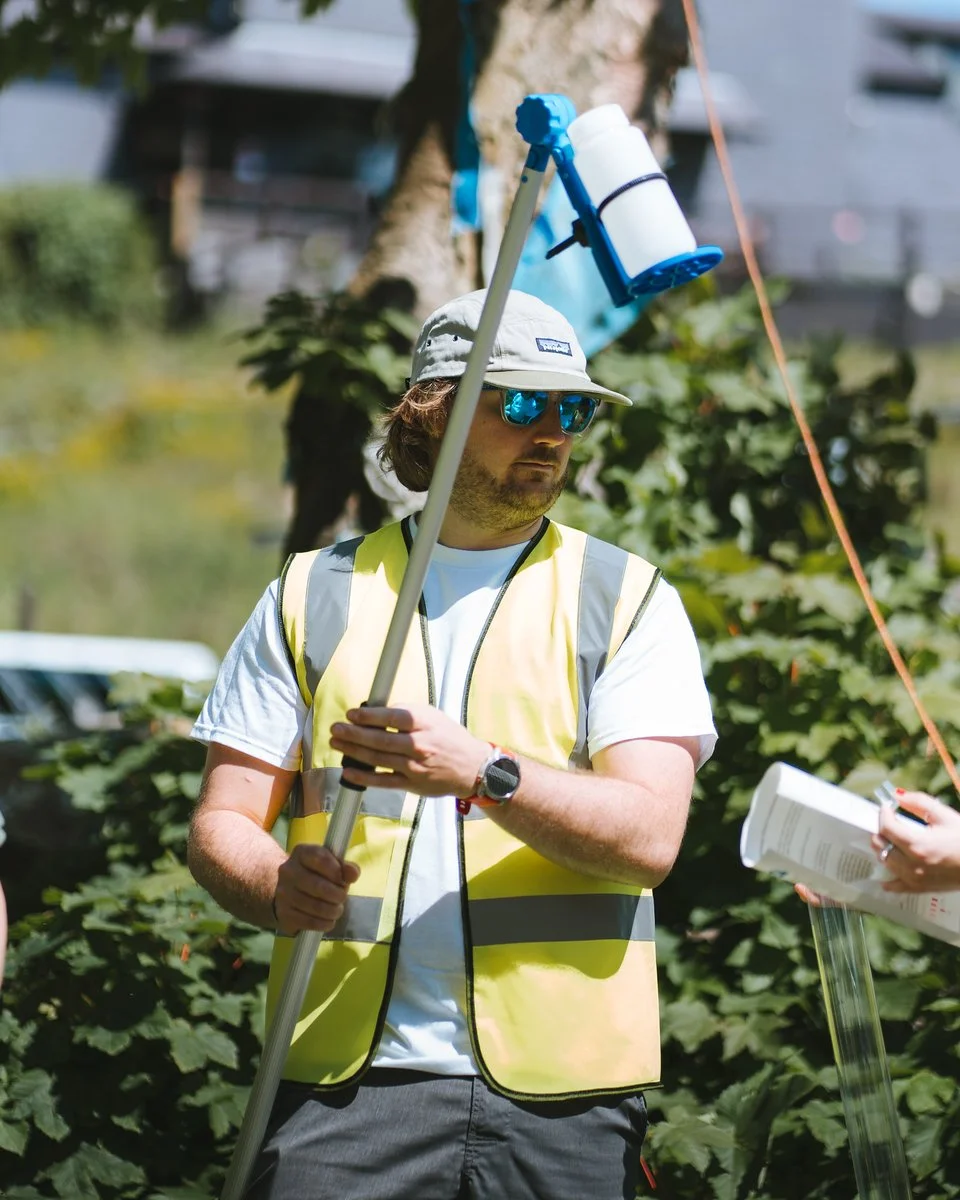
Lab Dwr volunteers in action in the Eryri uplands
Better data means better decisions. Instead of relying on a handful of monitoring locations, we'll be able to identify pollution hotspots, understand cumulative impacts and target restoration where it will make the greatest difference. Whether the issue is nutrient enrichment, wastewater, agricultural runoff or emerging contaminants, this evidence will help guide future investment and action.
This is exactly the direction environmental management needs to take—combining innovation, partnership and community involvement to build a far more detailed understanding of our catchments. By working together from source to sea, we can ensure that interventions are based on evidence, resources are targeted effectively, and the rivers and coastal waters of North West Wales are healthier for generations to come.
This is the future of catchment management, and we're proud to be leading the way.
Find out more here
