
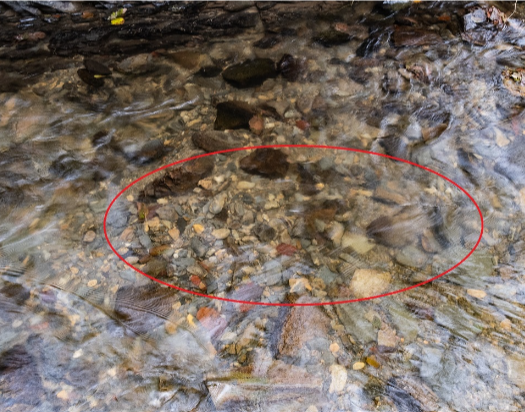
In 2020, North Wales Rivers Trust removed an old wall structure that restricted the movement of migratory fish. In its place, we installed a rock-ramp easement designed to improve fish passage and reconnect the river with important upstream spawning habitat.
Since completing the works, follow-up surveys have identified sea trout redds (spawning nests) upstream of the former barrier. This provided encouraging evidence that migratory fish were successfully accessing habitat that had previously been difficult to reach.
Yesterday, we returned to the site, six years after the original restoration works, to assess how the rock ramp was performing and identify any opportunities for further improvements.
It's great to see that the rock ramp remains in good condition after six years. However, our visit also highlighted an opportunity to further improve fish passage. Raising the downstream water level could help create better conditions for fish to navigate the structure, particularly during periods of lower river flow.
River restoration doesn't end when the work is completed. Revisiting sites, monitoring their condition and identifying opportunities for improvement are all important parts of ensuring that restoration projects continue to deliver long-term benefits.
It's encouraging to see our previous work holding up well, while we continue to look for ways to improve river connectivity and support migratory fish populations across North Wales.
Restoration is an ongoing process, and every improvement helps create healthier, better-connected rivers for the future.
