
PFAS in Our Rivers: Who’s Responsible?

You probably don't think about PFAS when you pull on a waterproof jacket, open a takeaway box or cook with a non-stick pan. But these chemicals are all around us.
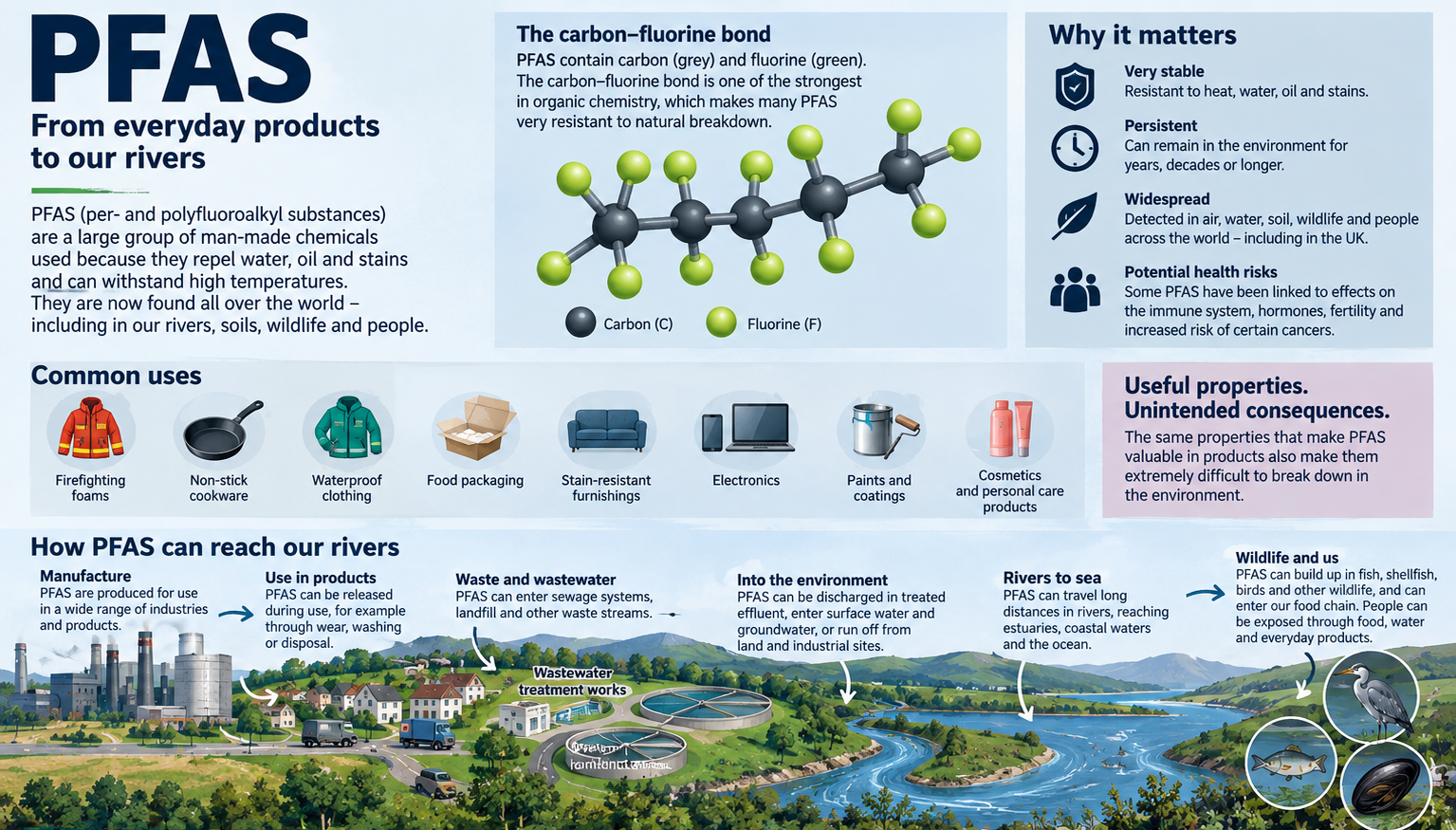
PFAS (per- and polyfluoroalkyl substances) are a huge family of man-made chemicals used because they're incredibly good at resisting water, grease, heat and stains. Many are extremely persistent, they don't readily break down in the environment, which is why they're often called "forever chemicals." Once they get into our water, getting them back out isn't easy.
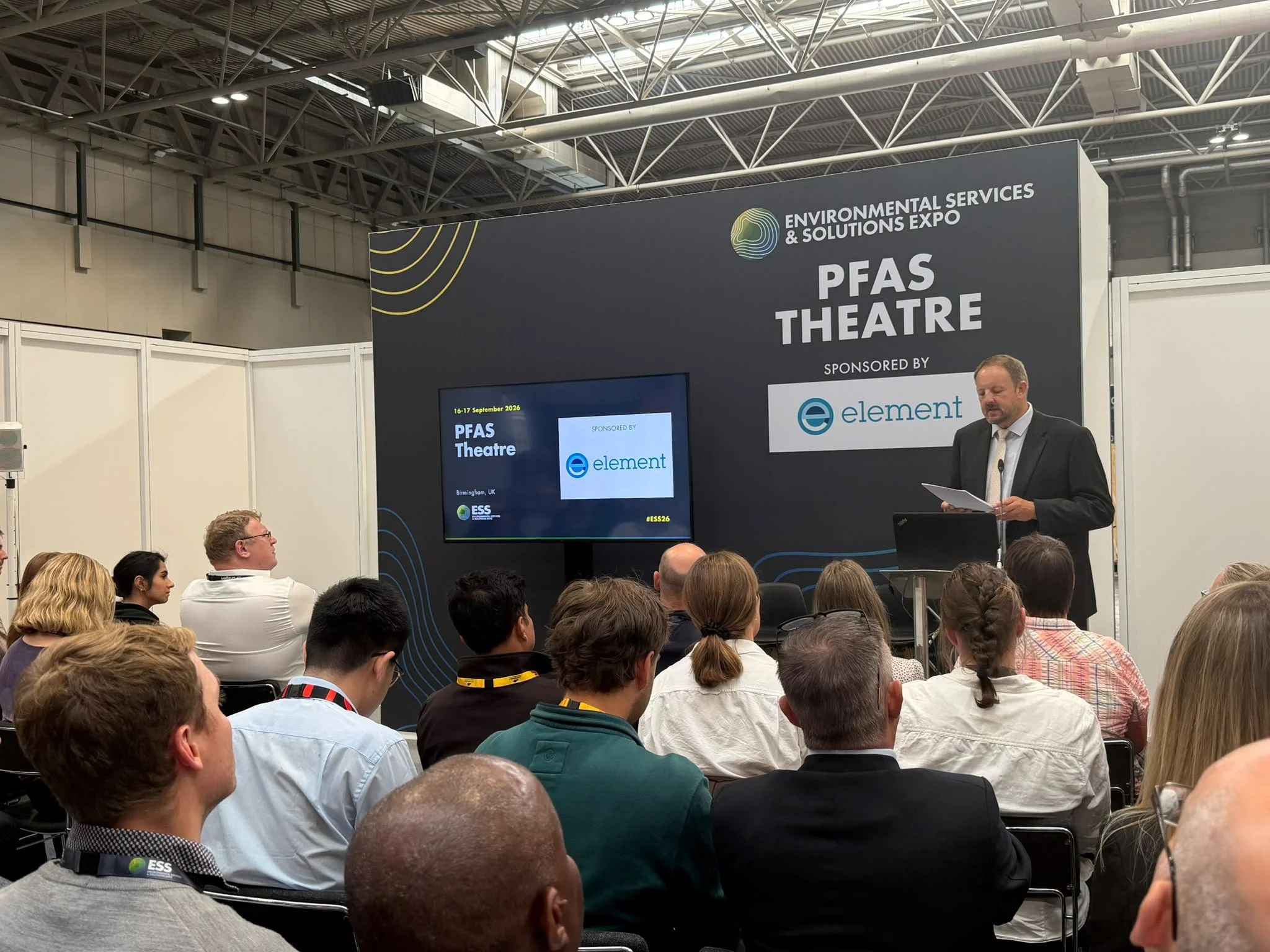
PFAS a hot topic at the Enviro Expo in Birmingham
Why they’re so stubborn
PFAS contain chains of carbon and fluorine atoms. The carbon–fluorine bond is exceptionally strong, giving these chemicals their remarkable resistance to heat, water and chemical reactions.
Some PFAS can move through soil and water, and some accumulate in wildlife and people. There are thousands of different PFAS, and they don't all behave the same way or carry the same evidence around health effects. But their persistence alone is a problem: a chemical designed to resist breaking down is a chemical we can't afford to lose control of.
The pollution we can’t see
When we talk about polluted rivers, we tend to picture what's visible, plastic bottles, sewage, foam, oil, but some of the most persistent pollution is invisible.
Natural Resources Wales has been monitoring groundwater for decades, and in 2023 it tested 70 groundwater monitoring sites for two PFAS, PFOA and PFOS. At two locations, concentrations were above the Drinking Water Inspectorate's Tier 1 guideline value, and NRW says it is developing its monitoring so a wider range of PFAS can be measured in future.
We need a better understanding of PFAS in our catchments: where they're coming from, how they move through the water system, which activities are contributing to them, and how to stop them entering the water in the first place. Once persistent chemicals are in the water cycle, cleaning them up is a much harder job.
Where they come from, and what AI has to do with it
PFAS have been used across a huge range of industries, including textiles, electronics, manufacturing, firefighting and semiconductor production, and as technology changes, so does the conversation, with AI now part of it.
AI infrastructure lives in enormous buildings packed with powerful computers, and those computers produce enormous amounts of heat, so keeping them cool is becoming one of the biggest challenges for the data-centre industry. Some advanced cooling technologies have used fluorinated fluids, including PFAS-related substances; in two-phase immersion cooling, for example, electronic equipment is immersed in a liquid that absorbs heat, boils into a vapour and then condenses back into a liquid. Not every data centre uses PFAS, though: other cooling systems, including water-based approaches, exist, and the industry is actively looking at alternatives.
The chips powering AI are made in semiconductor factories, where fluorinated chemicals are used in processes including etching and cleaning, and the US EPA also identifies fluorinated heat-transfer fluids used in semiconductor manufacturing. Some semiconductor processes have also used PFAS in materials such as photoresists and coatings.
As AI grows, the environmental conversation around it needs to extend beyond electricity use to the chemicals its infrastructure depends on, and where those chemicals end up.
Who pays when they reach the river?
Responsibility currently sits at the end of the pipeline: someone discovers a chemical doesn't break down and has entered the environment, and only then do the expensive questions get asked, how to monitor it, how to remove it, how to protect drinking water, how to clean up contaminated land, and who pays.
Those questions should be asked before the chemical is used, not after. If a manufacturer chooses a persistent chemical because it makes a product work better, that manufacturer should be responsible for understanding what happens to it throughout the product's entire life, not just when it leaves the factory.
Prevention has to come first
We need better monitoring of Welsh rivers, groundwater and coastal waters, transparency about which products and industrial processes use PFAS, and investment in safer alternatives, with a shift towards them where they already exist. Asking a water company to remove a persistent chemical after it has entered the water cycle is not the same as stopping it getting there, and the best pollution is the pollution we prevent.
That responsibility shouldn't sit entirely with consumers. People shouldn't need a chemistry degree to work out whether the products they buy contain persistent pollutants, and manufacturers, who know what they put into their products and why, should be responsible for finding safer alternatives and for the environmental consequences of what they put into the world.
Our rivers are not a test site
Wales is a country shaped by water, and its waters are already under pressure: NRW's 2024 assessment found that only around 40% of Welsh water bodies were at good or better overall status.
Our rivers should be places for people and nature, not the final destination for chemicals designed to last. PFAS pollution shouldn't be something we learn to live with, we need to stop it at source.
