
The Menai Data Centre: At What Cost?
Water, cooling, PFAS and the questions that still need answering
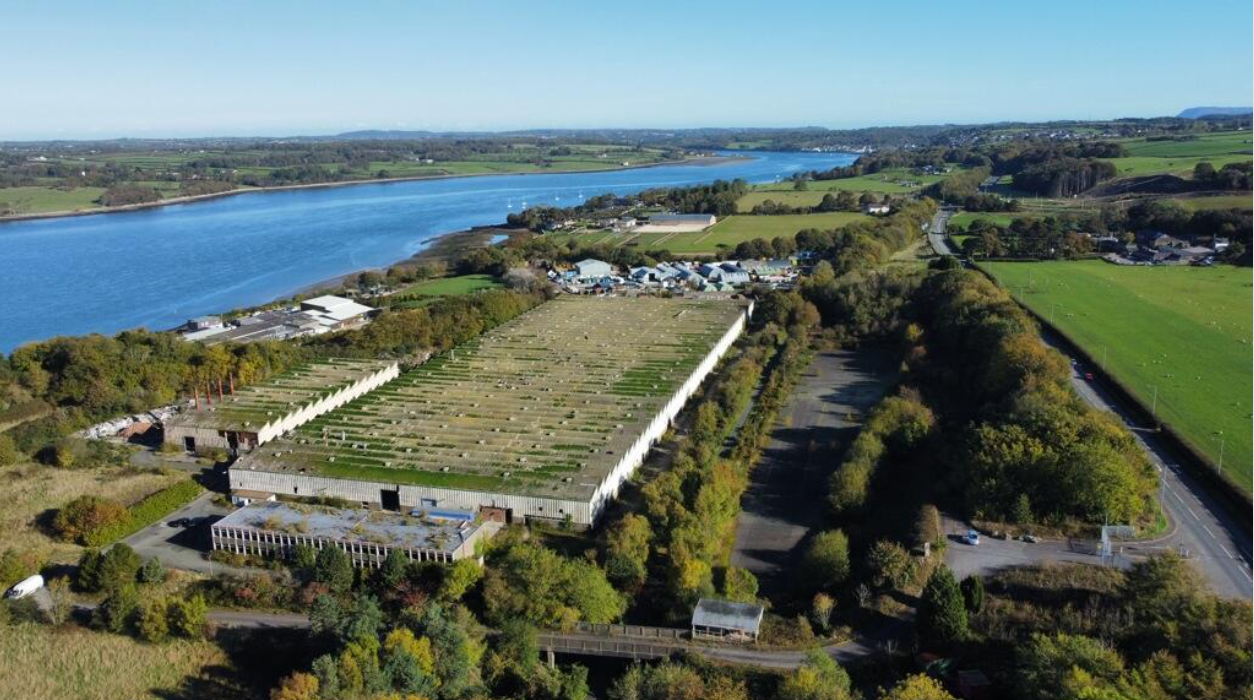
A MAJOR data-centre development is proposed beside the Menai Strait, and we believe several questions still need to be answered before it goes ahead.
A major data-centre campus is proposed on and around the former Ferodo site at Griffiths Crossing, near Caernarfon.
The planning application, C25/0740/20/EIA, was submitted by Gwelyfenai Ltd. It is an Environmental Impact Assessment application covering the demolition of existing structures, regrading of the site and construction of data-centre buildings together with generators, plant, substations, drainage and associated infrastructure.
The proposed site is approximately 41 hectares. The plans show up to five substantial data-centre buildings, with the tallest building exceeding 30 metres. The proposed electricity connection is rated at 450MW.
Water Use
The Environmental Statement reports a maximum water requirement of approximately 11,949,120 litres per day. The developer has clarified that this is a maximum-use scenario, and that the expected normal daily requirement, based on the cooling technologies currently under consideration, is approximately 700,000 litres per day. Both figures appear in the documentation, and it's worth understanding what each would mean in practice, including what happens if the facility operates at its maximum scenario, during periods of high temperature, or as the site expands over the lifetime of the development.
Water consumption and wastewater are separate but related issues. Some cooling systems discharge water as wastewater after use, while others reduce consumption through closed-loop systems or alternative technologies. The UK Government's National Framework for Water Resources 2025 identifies data centres as a sector that can require large quantities of water for cooling, and notes that water availability needs to be considered alongside the cooling technology selected and the location of the facility. It also observes that closed-loop systems are more water-efficient than open-loop ones. The Welsh Government has similarly noted significant variation in water consumption across different data-centre designs and pointed to closed-loop systems as one way of reducing water use.
Dŵr Cymru Welsh Water has raised concerns about the proposal, including the capacity of local sewerage infrastructure and the information available on cooling technology and water requirements. Given this, it seems reasonable to ask where the water will come from, how much will be consumed, how much will enter the sewerage system, whether existing infrastructure has sufficient capacity, and what safeguards would apply during extreme weather or peak demand.
PFAS
A further issue is the potential use of PFAS (per- and polyfluoroalkyl substances), sometimes called "forever chemicals." A peer-reviewed study published in Nature in 2025 examined the environmental impacts of different data-centre cooling technologies across their lifecycle, finding that two-phase immersion cooling can support high power densities but relies on PFAS-containing fluids; the study also discusses regulatory scrutiny of PFAS and the potential implications of accidental releases. We think the proposal should clarify which cooling technology is being put forward, and whether it involves PFAS-containing fluids.
Why location matters
The site sits immediately beside the Menai Strait, which forms part of the Menai Strait Marine Special Area of Conservation and where Dŵr Cymru is already carrying out work to improve water quality. This doesn't mean the development will cause pollution, but a project of this scale involving significant water use, wastewater and cooling infrastructure needs to demonstrate that appropriate safeguards are in place. If PFAS-containing fluids are proposed, we want to know; if they aren't, we'd like that confirmed; and if PFAS-free alternatives are technically suitable, we want to know whether they've been considered.
What we've asked for
We have requested further information covering: the precise cooling technology proposed; normal and maximum water consumption; the source of the water supply; expected wastewater volumes; sewerage system capacity; the substances likely to be present in wastewater; whether PFAS-containing substances will be used; the proposed cooling fluids and refrigerants; leak-prevention and monitoring arrangements; disposal of cooling fluids and equipment; and whether PFAS-free technologies have been assessed.
The development is being presented as an opportunity to regenerate a former industrial site and bring investment and employment to the area. At the same time, the Welsh Government has acknowledged that AI and data-centre development could increase demand for water, national water-resources planning identifies data centres as an emerging source of demand, and Dŵr Cymru has raised infrastructure concerns specific to this proposal. We think the public is entitled to understand what the development will require from the area and what safeguards will be in place, and we will continue to seek answers to these questions.
Before a development of this scale is built beside the Menai Strait, the public should know exactly what it will take from the area and what safeguards will be put in place to protect it.
